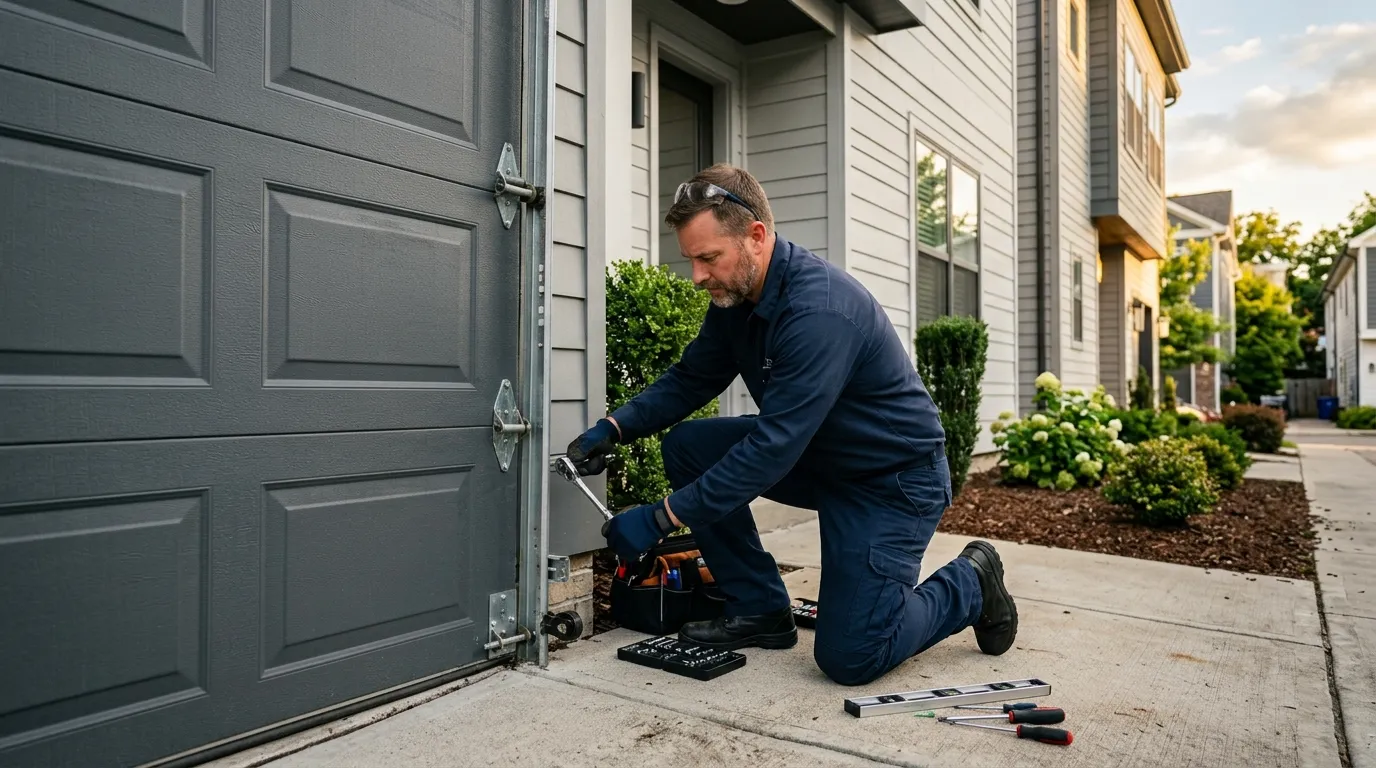
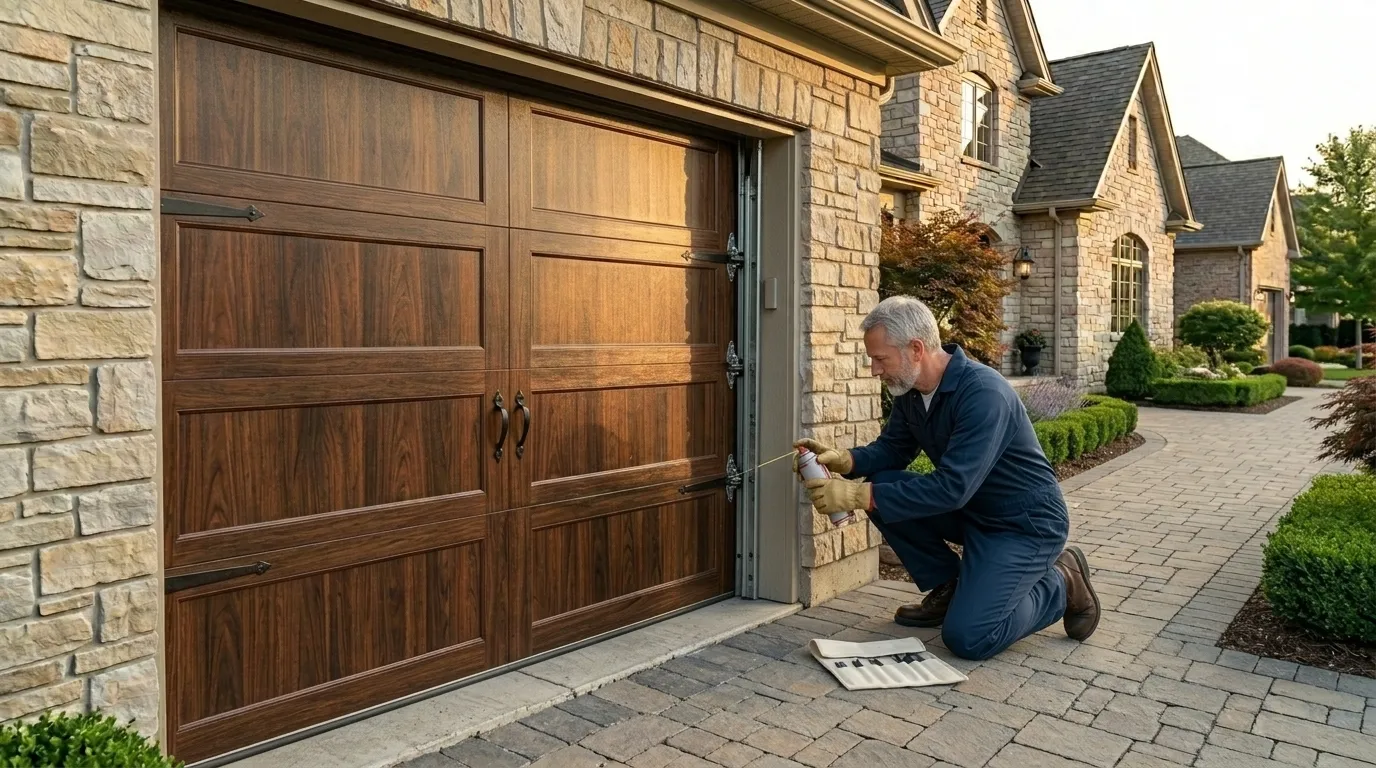
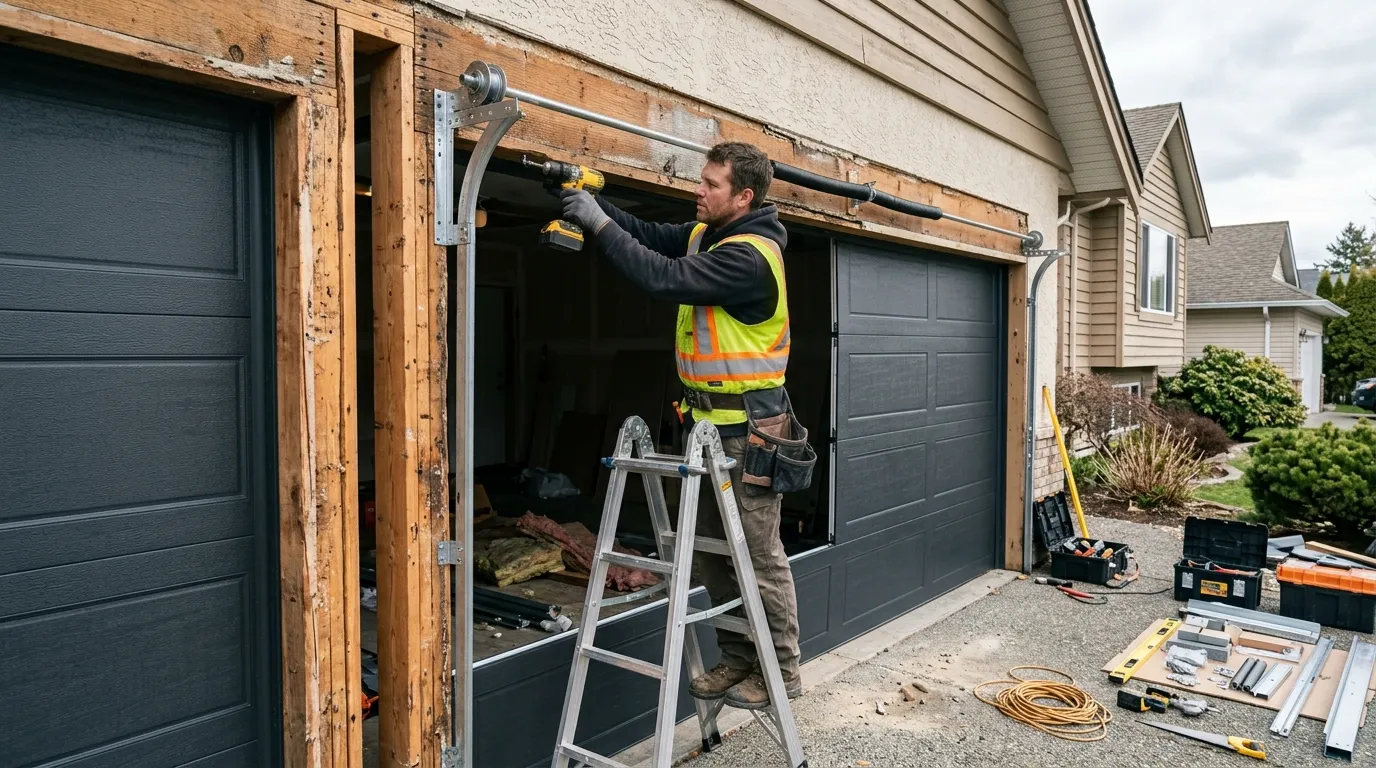
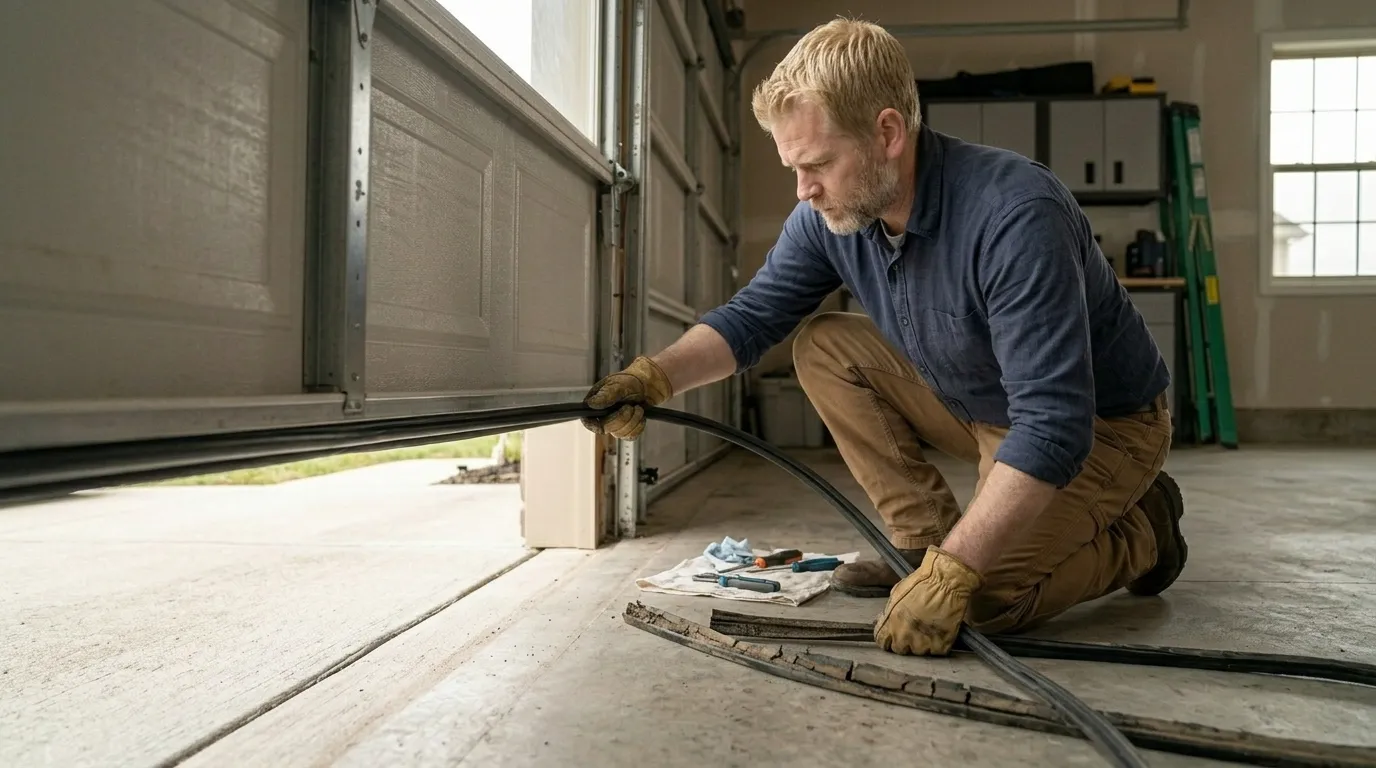
Topanga homes went up mostly around 1971, well past the region's median build year. Our crews travel up from Santa Monica to fix the era-specific hardware that comes with that.
A lot of the housing in Topanga dates to around 1971, which puts it later than the median build year for our whole service area (F1: 1947-2012, median 1963). Doors going up in the early '70s were mostly sectional, hung on extension springs mounted overhead rather than the torsion bars that came to dominate a decade later. That's the hardware we're usually looking at when a call comes in from up here - stretched or snapped extension springs, worn pulleys, and the safety cables that should be running through them but often aren't, since retrofit cable kits didn't become standard practice until after these doors were installed.
We bring the parts and tools for that era of door on the truck, because guessing wrong on a nine-mile drive up from Santa Monica wastes everyone's time. If a door needs a full torsion conversion instead of a spring swap, we'll say so on site rather than mid-repair. One limit worth naming up front: if the opener is original to a 1971 install, we usually recommend replacing it rather than sourcing parts for it - motors from that period aren't worth chasing down, and a modern opener costs less than the labor to keep an old one limping along.
Why This Fails Locally
Extension-spring doors fail differently than the torsion-spring doors more common in newer construction. The springs stretch along the horizontal tracks instead of coiling on a shaft above the door, so when one goes, it tends to let the door drop unevenly rather than jamming shut evenly. On a heavier wood-panel door - and a fair number of Topanga's original doors were solid wood, not the lighter steel or composite panels that came later - that uneven drop puts real strain on the opposite track and the rollers on that side.
Topanga's roughly 3,098 households sit in a mild temperate climate band, so we're not dealing with the freeze-thaw cycles that crack hardware elsewhere, but decades of sun and dry heat still take a toll on wood panels and on the lubrication in old pulleys. At a median household income of $142,553 here - well above the $83,538 median across our service area - most owners we talk to choose a full spring and hardware replacement over another patch job, since the parts on a door this old are getting harder to match anyway.
Getting It Booked In
We work out of Santa Monica, about nine miles from Topanga, so there's no local branch or drop-in counter here - every job starts with a call or a booking through the site and a truck coming up to you. That distance doesn't change what we bring: for a house with 1971-era hardware, that means extension springs, safety cables, and torsion conversion parts, since we'd rather show up prepared than make a second trip.
When you call, tell us the door's original if you know it, or just describe what's happening - a door that drops crooked, a spring that let go with a bang, an opener that grinds without moving the door. That's usually enough for us to load the right parts before we leave Santa Monica. We don't keep a fixed same-day slot reserved for any one town; scheduling depends on the day's route, so booking ahead is worth doing rather than waiting for a spring to fail on a Saturday.
The Complications
Older wood-panel doors add weight the original springs were sized for at install, not for forty-plus years of wood swelling and drying with the seasons. A spring that was correctly matched to the door in 1971 can be undersized for it now, which means a straight parts swap isn't always the right fix - sometimes the door needs a heavier spring rated for its current weight, not a replacement of the exact original.
The other complication is hinges and track alignment on doors this age. If a door's been dropping unevenly for a while before anyone calls, the rollers have usually worn a groove into the track that a spring replacement alone won't correct. We'll flag that on site rather than replace a spring and send you off with a door that still binds. It's also worth saying plainly: if a wood panel door has warped enough that it's racking the frame, replacement is the honest answer, not another repair - we won't spend your money patching a door that's past that point.
How it works
From “it’s stuck” to “it’s fixed”
01
Tell us what’s wrong
Describe the symptom - won’t open, loud bang, opener runs but the door won’t move.
02
On-site diagnosis
A technician tests the door under power and by hand and finds what actually failed.
03
Clear, up-front plan
You get the fix that’s needed and what drives the cost - before any work starts.
04
Repaired & tested
The repair is done, the door is set true and tested, and the work area left clean.
Serving Santa Monica, CA - tell us what your door’s doing and we’ll take it from there.
Straight answers about garage door repair in Santa Monica. Still unsure? Ask us directly.
Why does my Topanga garage door feel different from a friend's newer door in the area?
It's likely the era. A lot of Topanga homes went up around 1971, when extension springs mounted along the horizontal tracks were standard, not the torsion springs common in doors built later. Extension-spring doors behave differently when something fails - they tend to drop unevenly rather than jam - which is why the fix often looks different too.
Do you have a shop in Topanga?
No. We're based in Santa Monica, about nine miles away, and travel up for every job. There's no local counter or drop-in service here - calls and bookings go through our Santa Monica office, and a truck comes to you with the parts loaded for the job.
Is it worth replacing an old wood panel door instead of repairing it?
Depends on condition. If the panel has warped enough to rack the frame, or the hardware is original from a 1971-era install, repair costs start closing in on replacement cost fast. We'll tell you honestly on site which side of that line your door is on rather than default to the repair that pays us more.
How does the climate here affect my garage door?
Topanga sits in the same mild temperate band as the rest of our service area, so you're not fighting freeze-thaw cracking. The bigger wear factor is sun and dry heat on older wood panels and on the lubrication in original pulleys and hinges, which is more about age than weather extremes.