Getting It Booked In
We run this job from Santa Monica, about 18 miles out to South Gate, so maintenance visits here get scheduled rather than dropped in on the same day. Tell us the door's age and whether it's ever had the springs replaced when you call - on a house from the early 1950s that's often never happened, and it changes what we bring.
We don't keep a branch or a crew based in South Gate. Every visit travels the same route from Santa Monica, which is why we ask for a little lead time rather than promising a same-hour fix. If the door is making noise but still opens, that's a maintenance call, not an emergency one, and it's worth booking as such - it costs less and we can plan the visit around parts we already know an older door will need.
How We Fix It
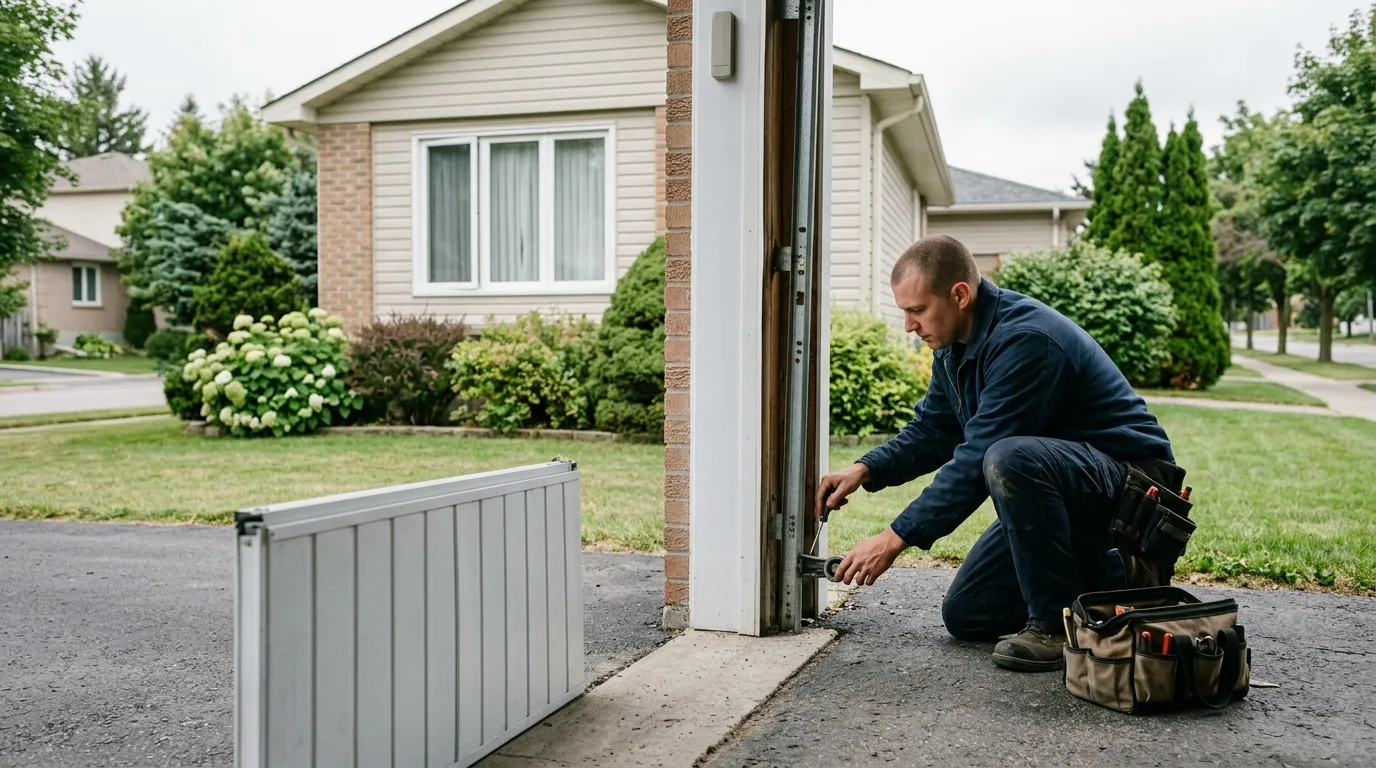
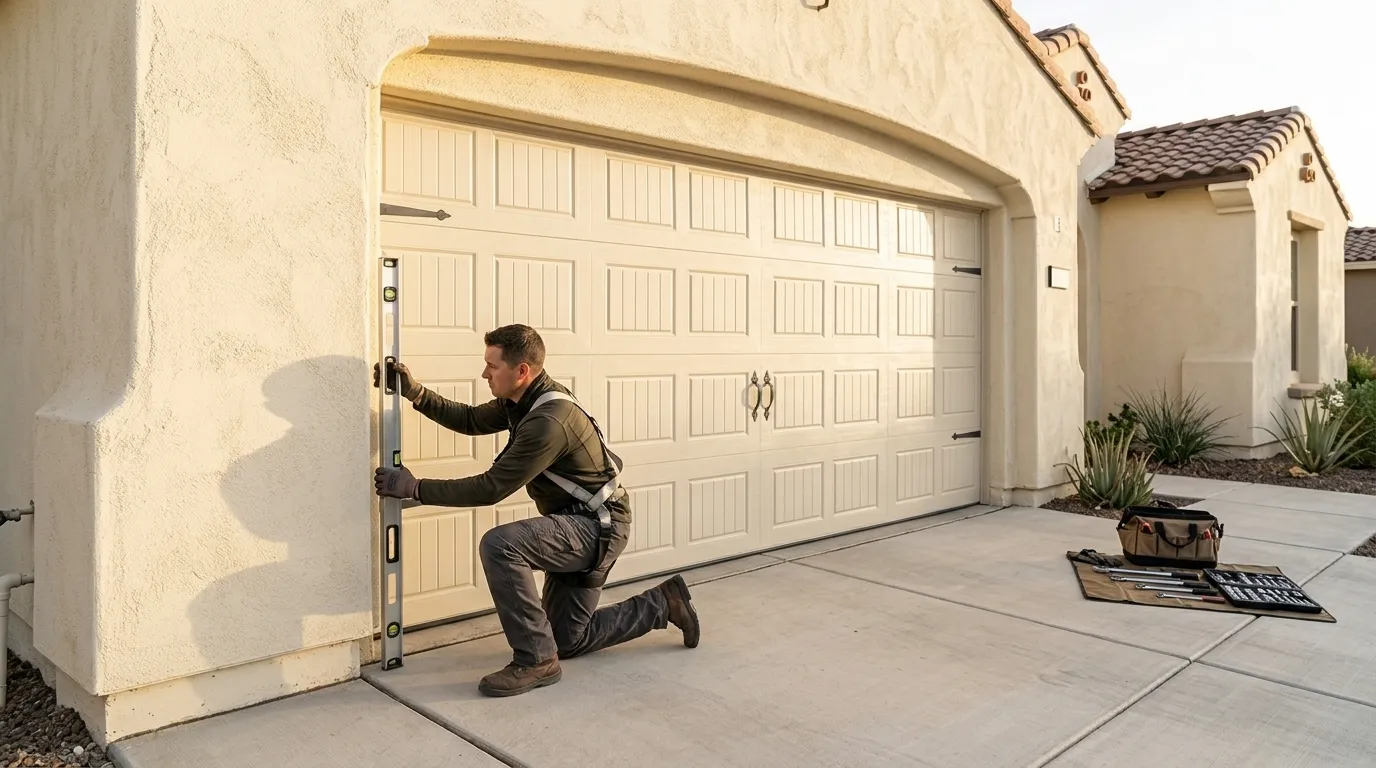
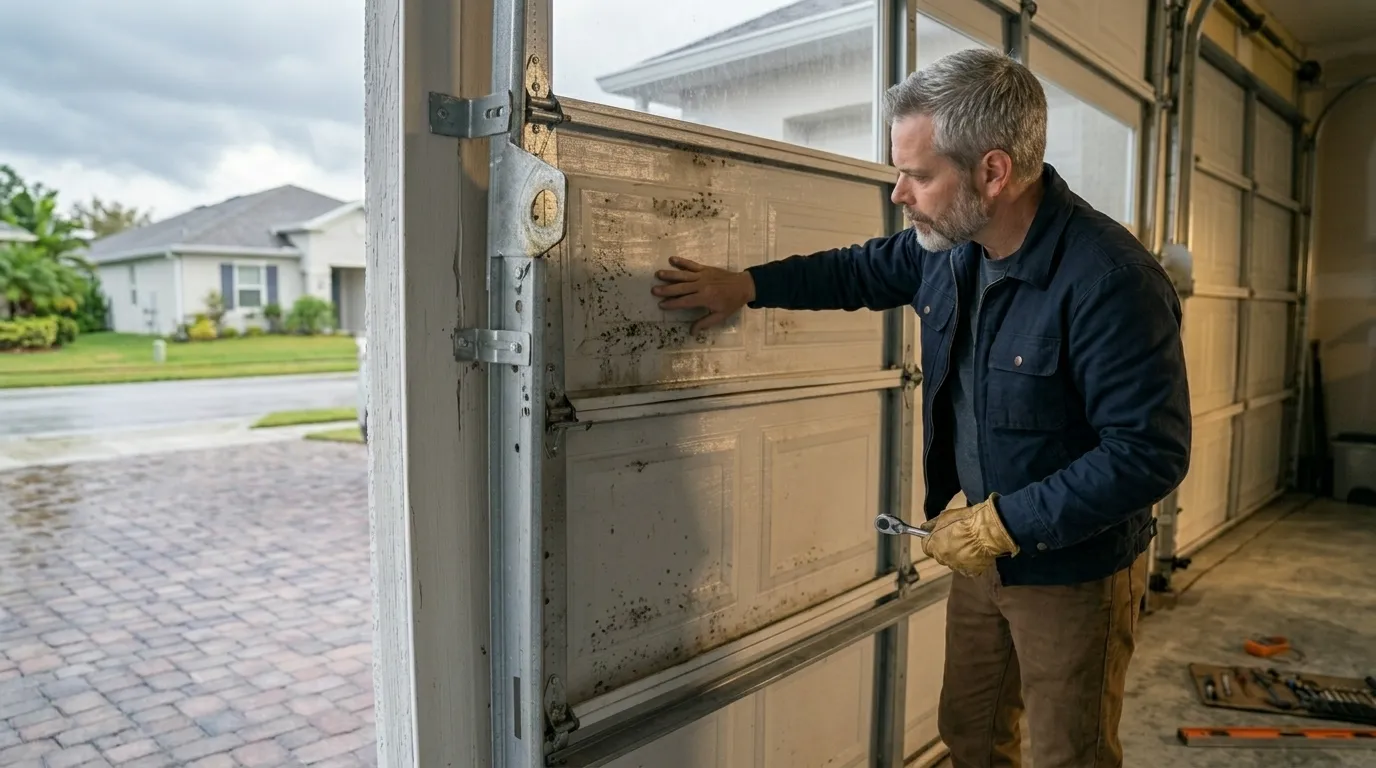
Maintenance on a house from this era starts with the track and the hinges, not the opener. On doors built around 1952, the track brackets were often set for a heavier one-piece door even if that door's since been replaced with a sectional one - we check that the current door actually matches the hardware it's hanging on, because mismatches are common on houses this old.
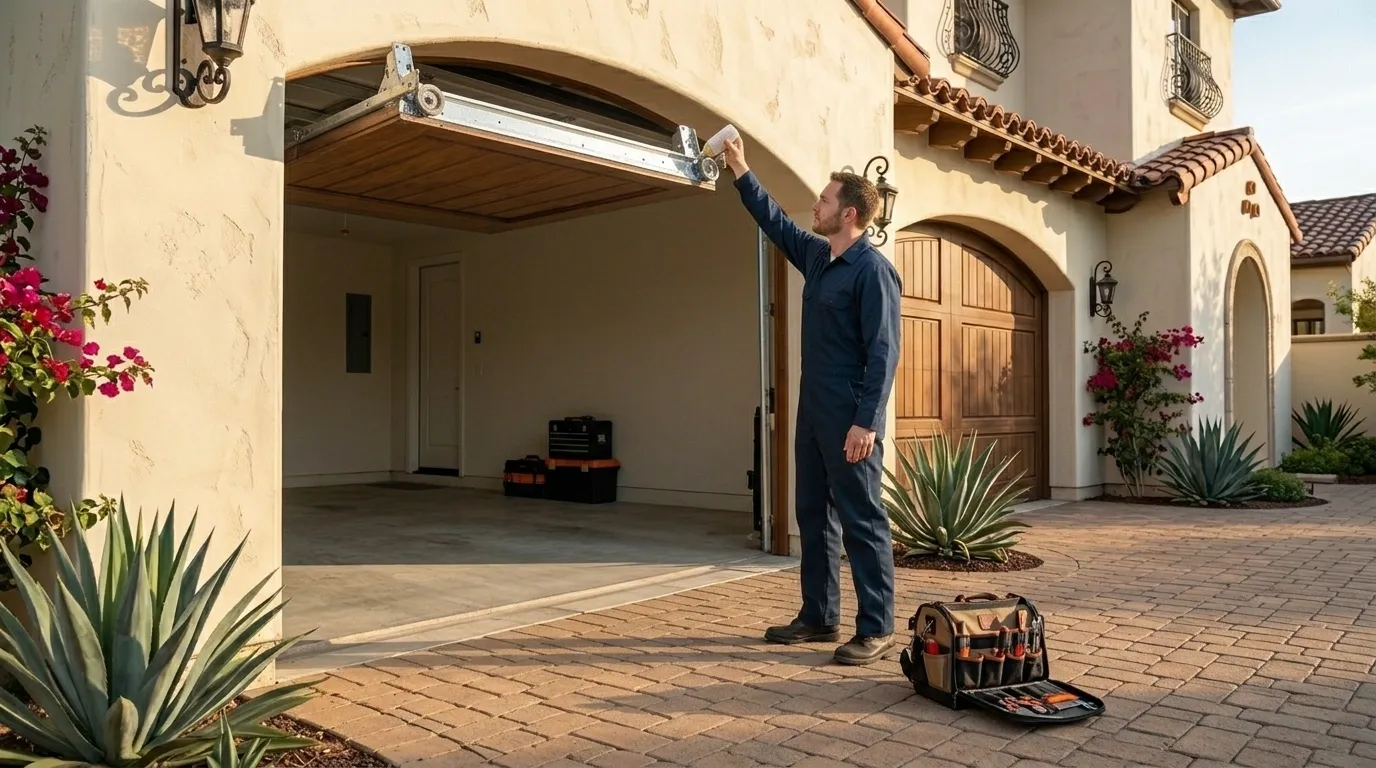
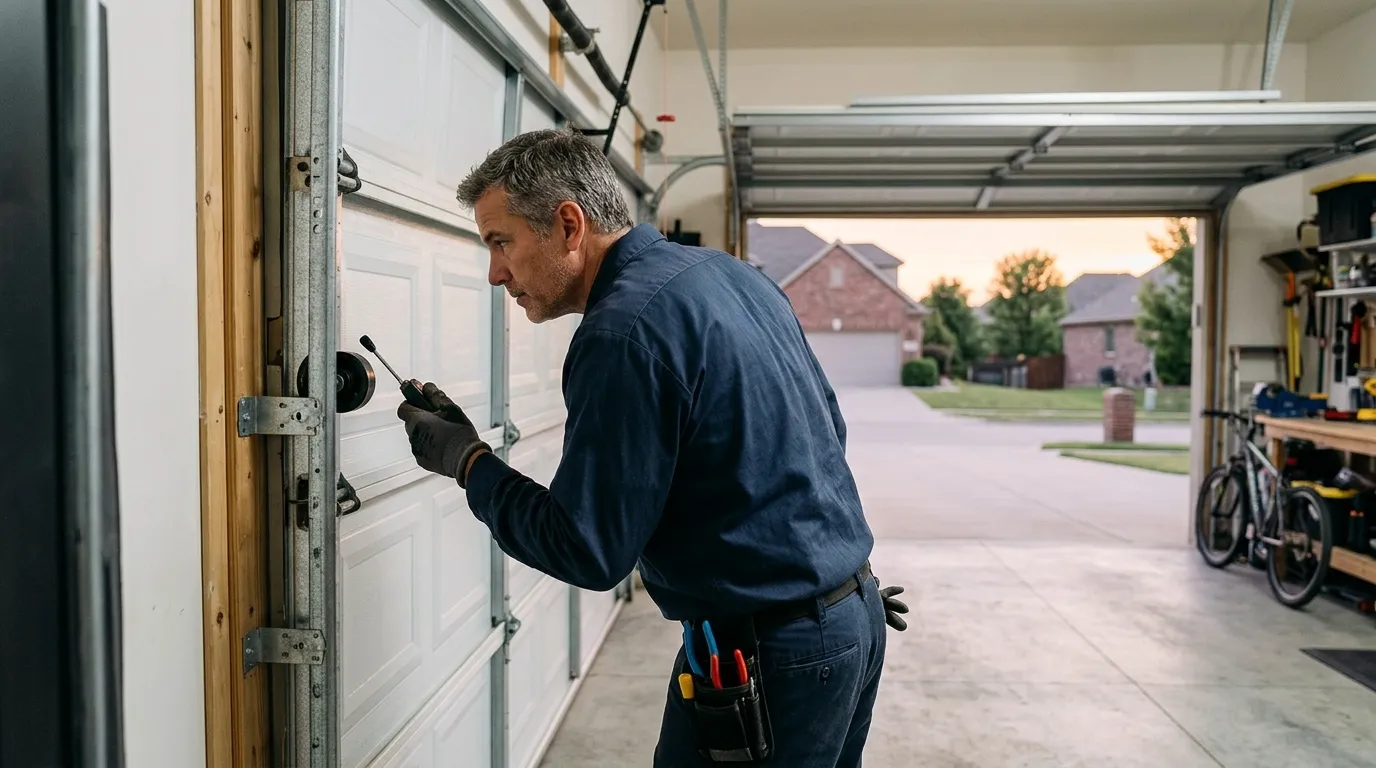
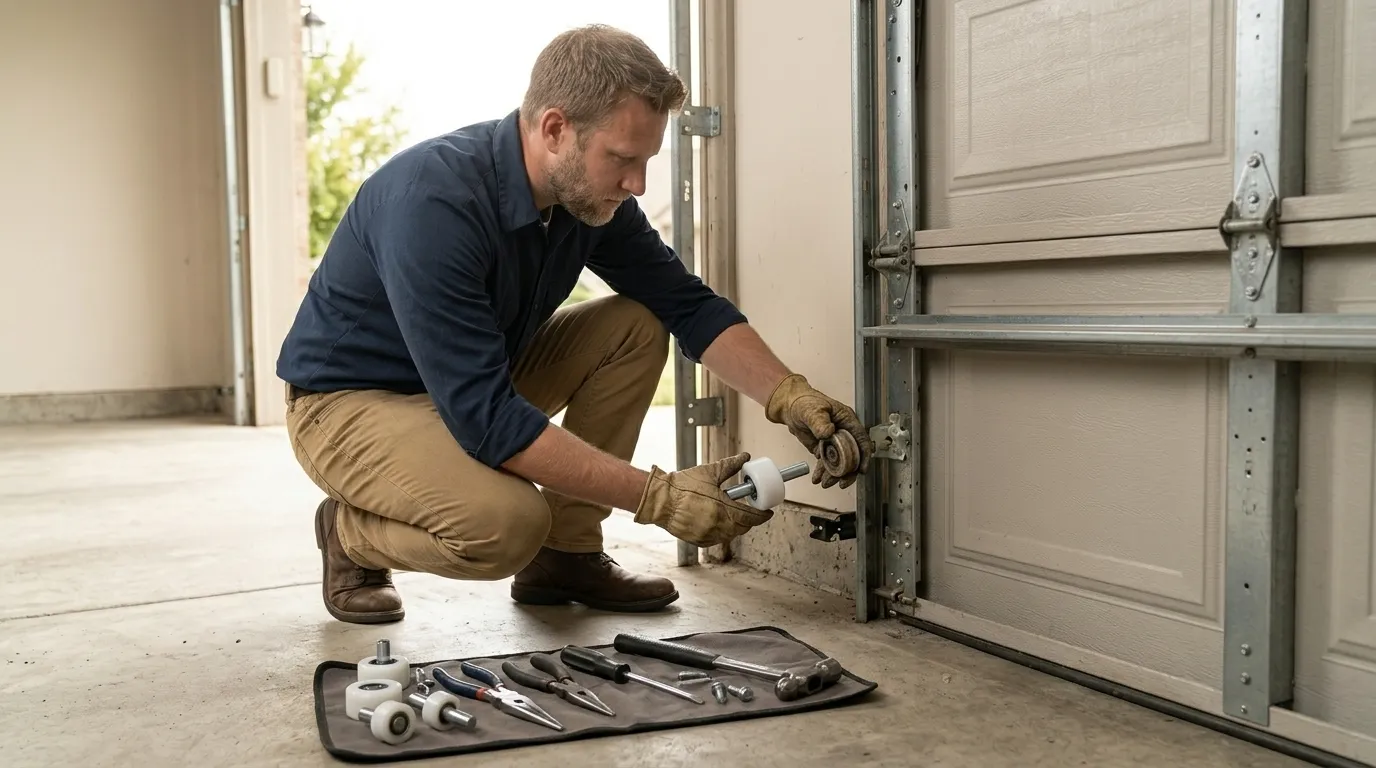
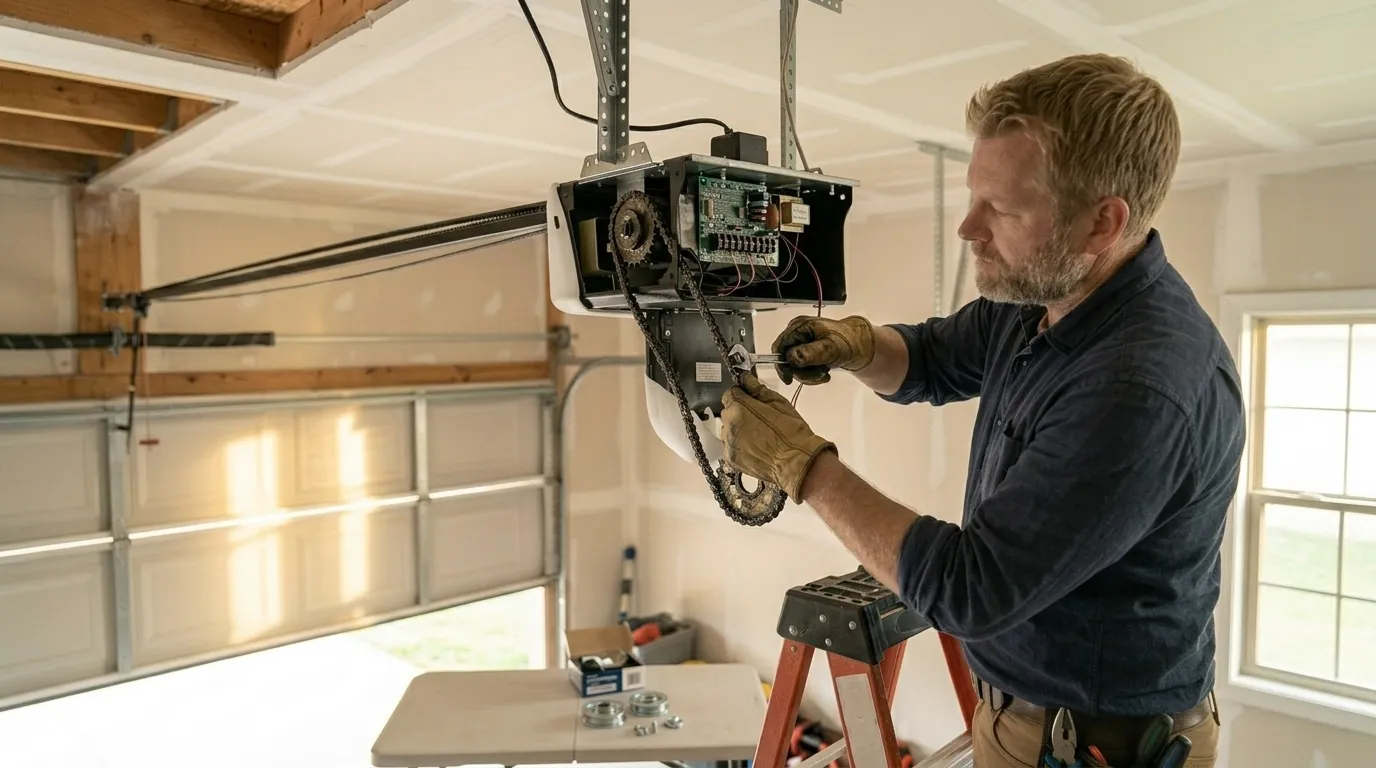
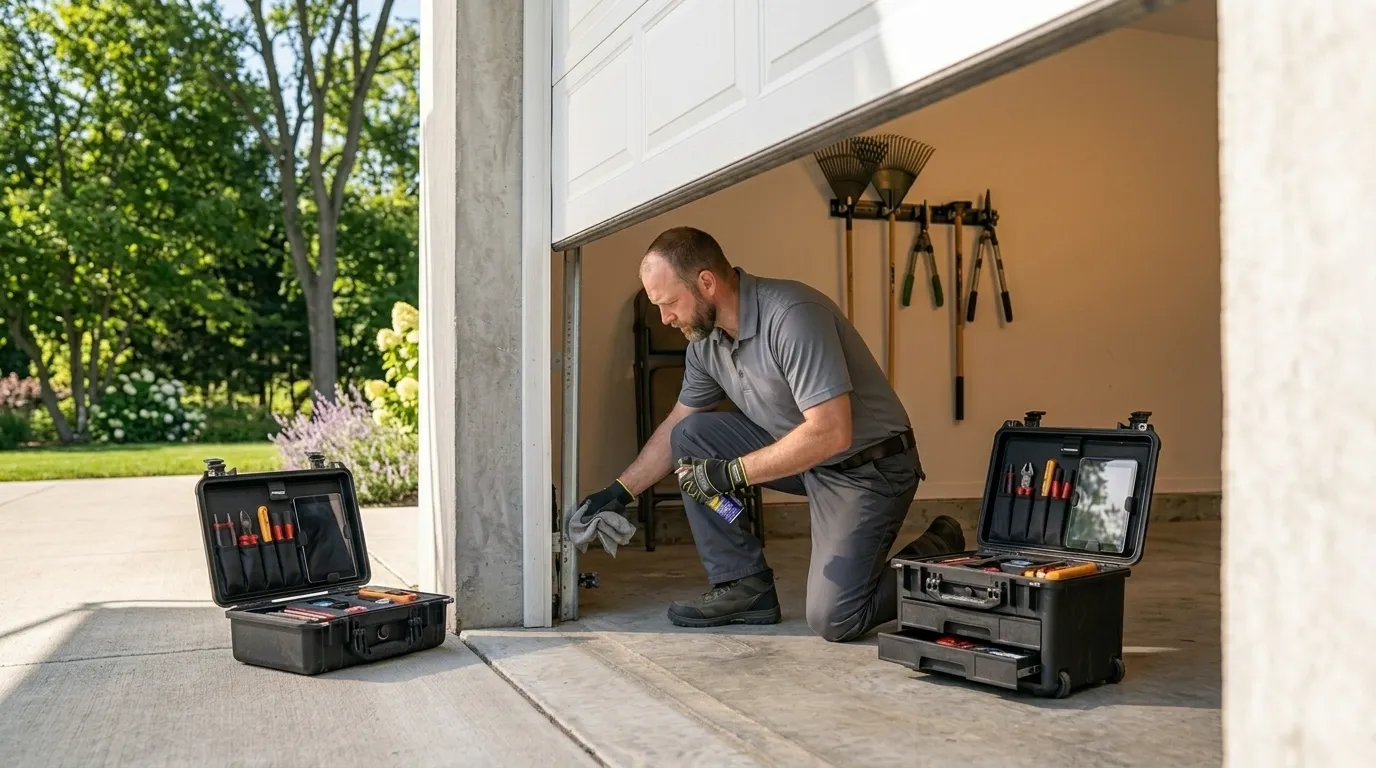
We lubricate rollers and hinges, check spring tension by hand rather than trusting the opener to compensate, and inspect cables for fraying at the drum. On a door this age, we also check whether the torsion spring is original - original springs on a house built in 1952 are long past their rated cycle count, and a maintenance visit is the cheapest time to catch that before it lets go under load. We tighten track bolts that have worked loose over decades of the door running on the same fasteners, and we test the auto-reverse safety feature, which didn't exist when the door was installed and may have been added later without a proper check.
Time on the Job
A standard maintenance visit - lubrication, hardware check, spring tension check, safety test - runs on the shorter end for most doors. Older hardware on houses from this era sometimes adds time, because seized bolts and painted-over adjustment screws take longer to work loose than they would on newer stock. We don't rush that part; a stripped screw on a door this age is harder to replace than the five minutes it takes to do it right the first time.
We don't have a fixed time figure to promise you, since it depends on what the previous owner did or didn't maintain, but we'll tell you upfront if we find something that turns a routine visit into a longer one.
What Is on the Truck
For a maintenance visit to a house from this era, we bring lubricant rated for steel rollers and hinges, a torque wrench for track bolts that have gone loose over decades, and spring tension gauges - we don't eyeball spring tension on doors this old, we measure it. We also carry basic cable and roller stock, since a fraying cable found mid-visit is common enough on original hardware that we don't want a second trip out from Santa Monica to fix it.
What we don't carry as standard stock is replacement track built to older, non-current dimensions - if the door needs a full track swap to match a 1952 opening, that's a separate job we'll quote once we've seen it in person.