How It Shows Up
A lot of the housing stock in East Los Angeles went up around 1950, well ahead of the 1963 median build year across the wider service area we cover. That earlier construction date usually means a smaller, single-car garage opening rather than the wider double bays common in later tract housing, and it means the door and track hardware have often already been swapped out once or twice over seven decades - sometimes with parts that don't quite match the original opening.
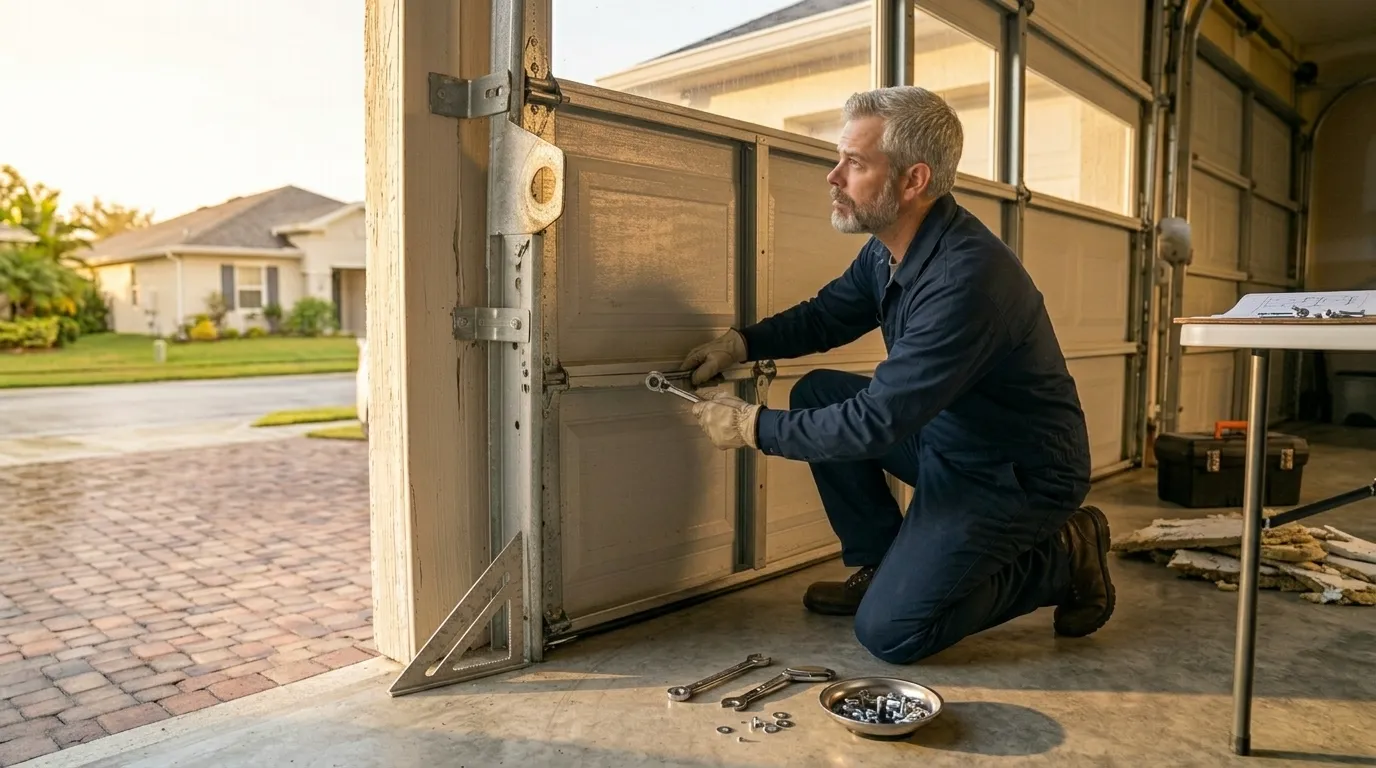
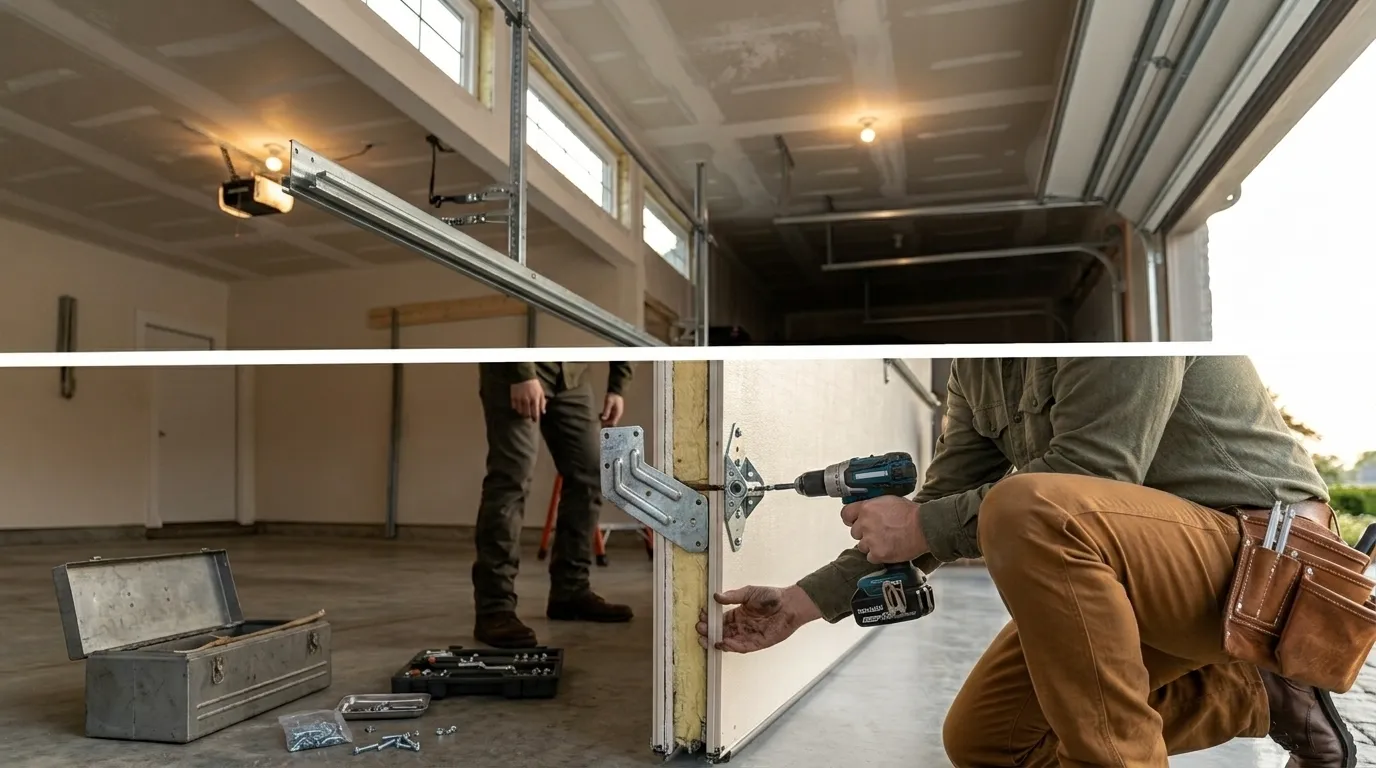
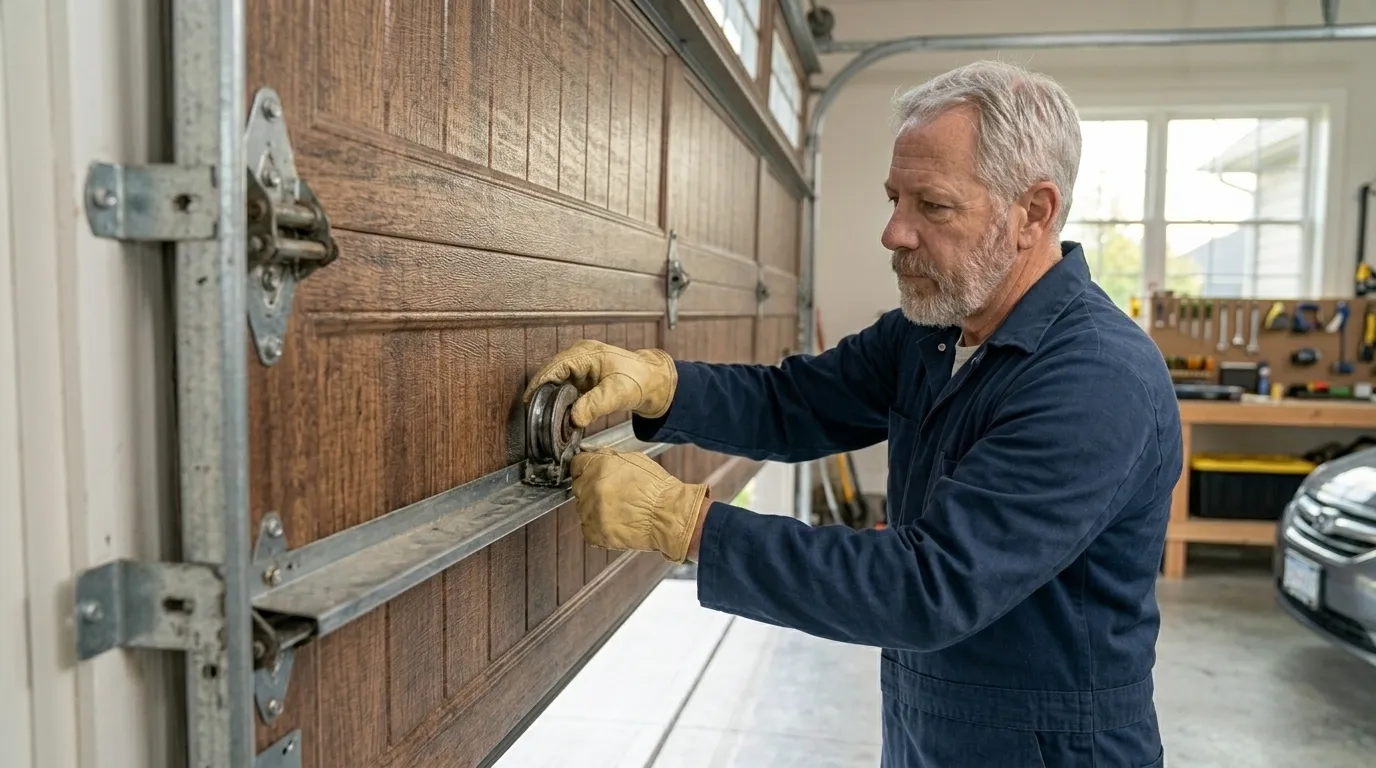
What we see on these older single-bay setups is wear concentrated at the hinges and rollers from a narrower track radius, plus lift cable fraying where a replacement door was hung on original drums sized for a lighter panel. The mild climate here doesn't put the doors through freeze-thaw cycling or heavy humidity swings, so wood rot and rust are less of a driver than they'd be somewhere colder or wetter - the wear you get is mechanical, from age and mismatched parts, not weather damage.
Time on the Job
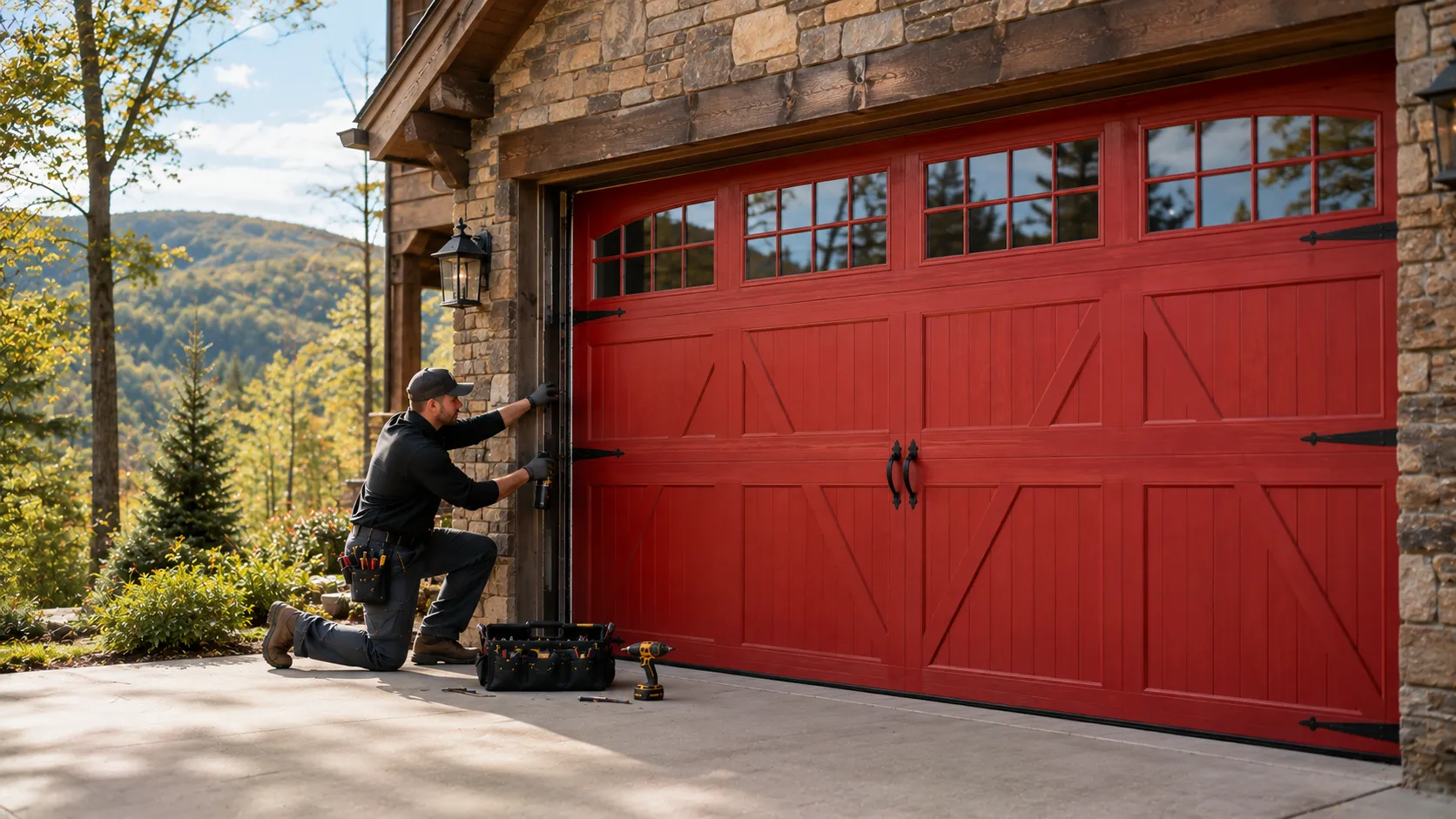
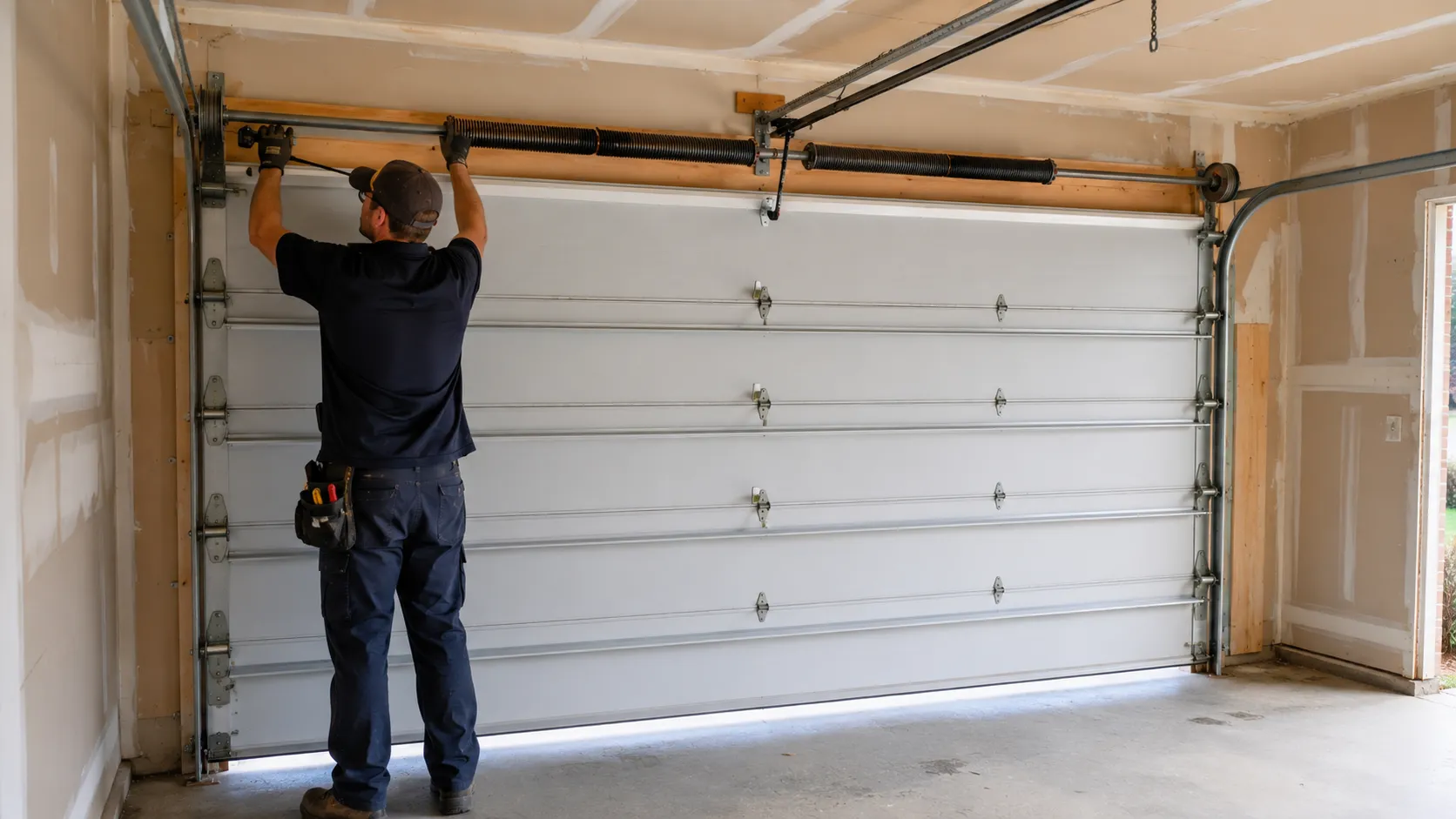
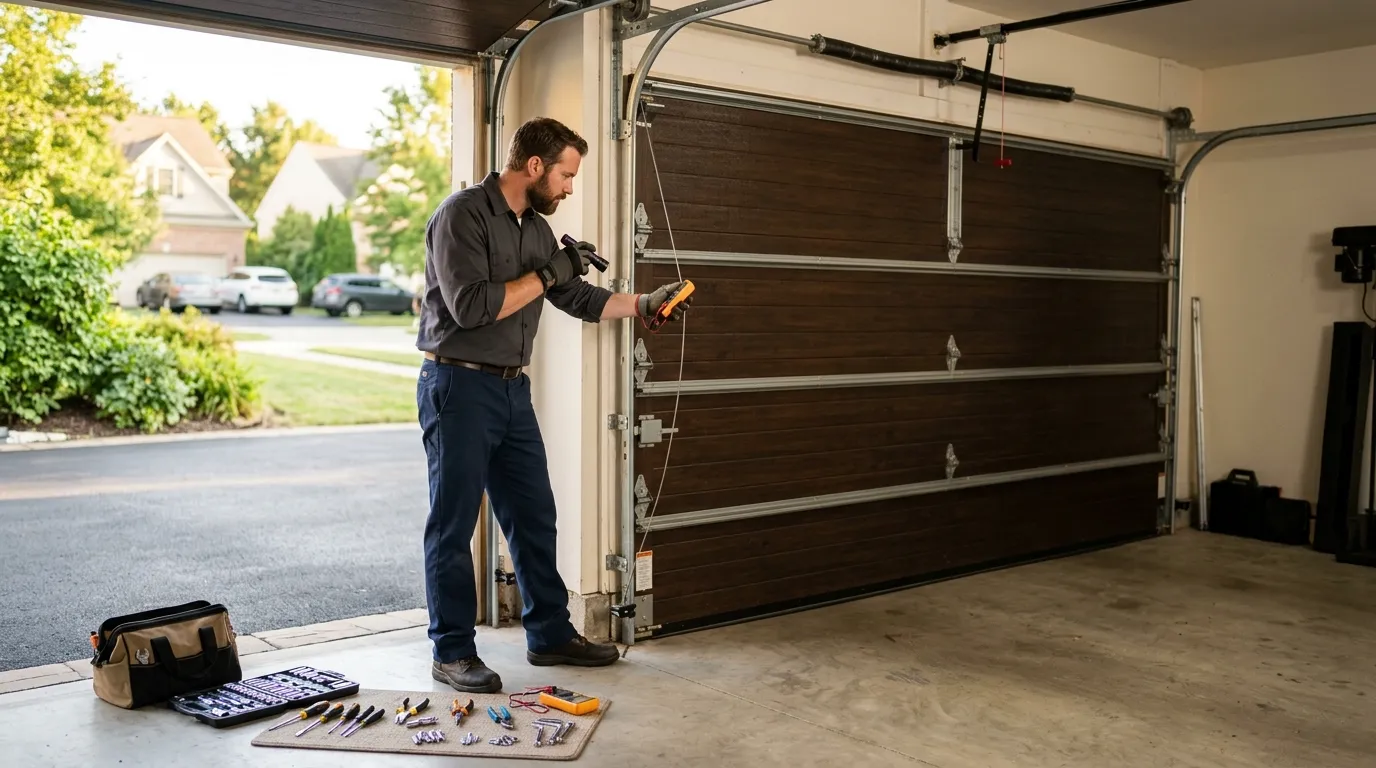
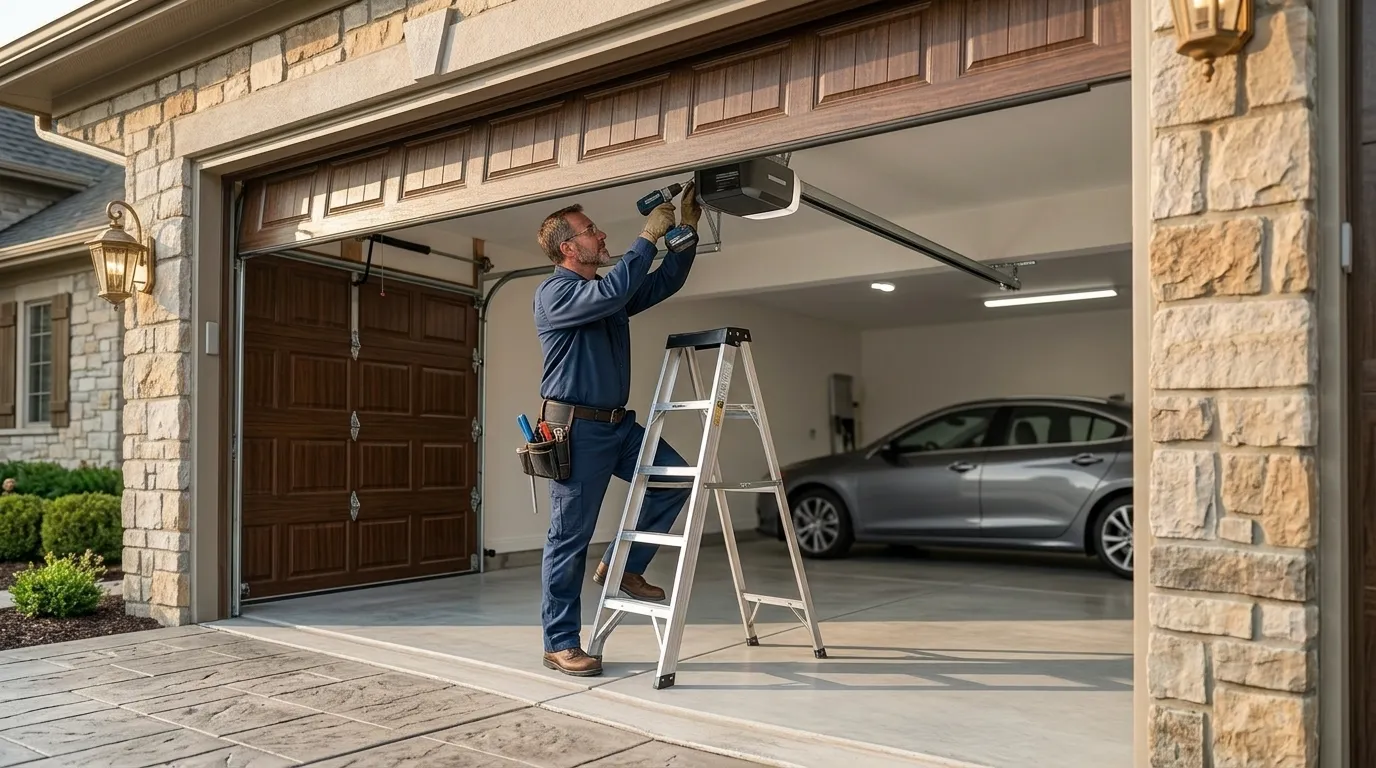
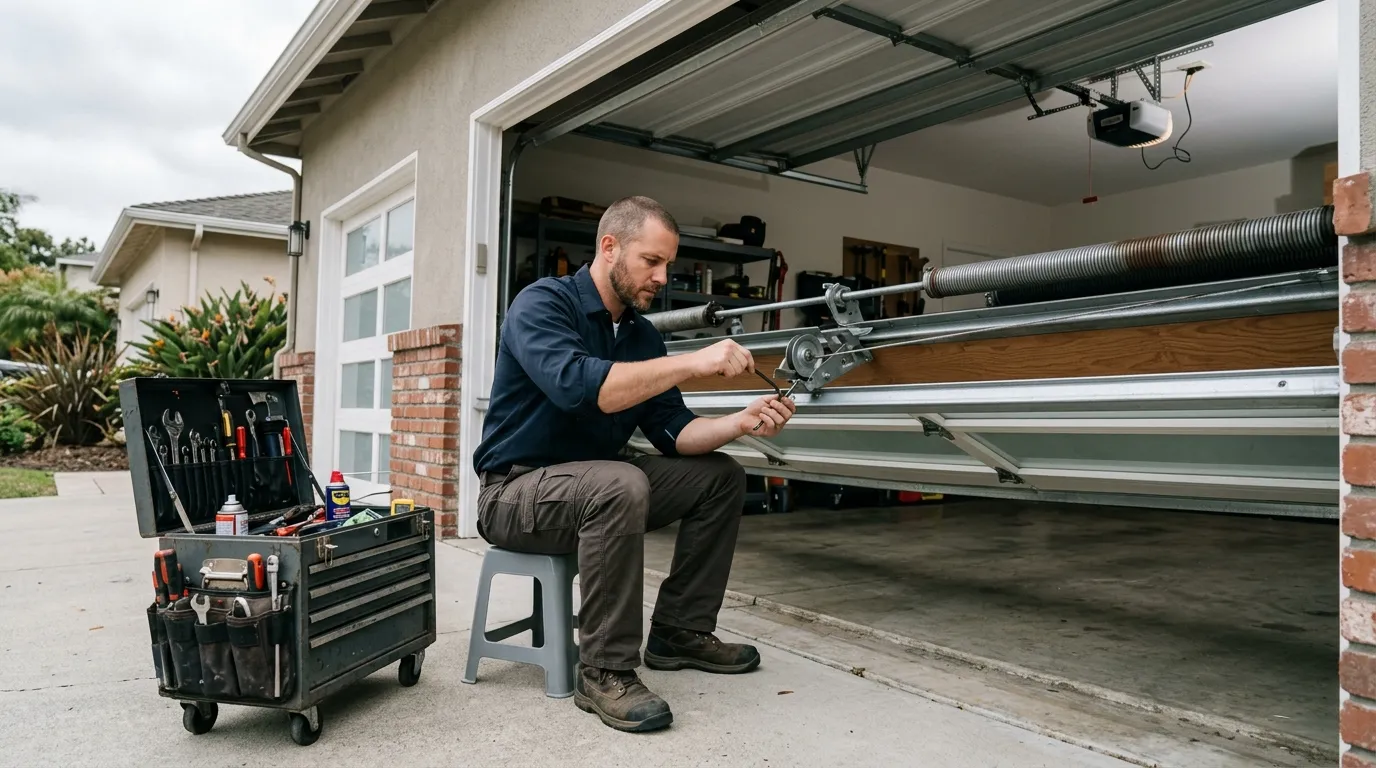
A standard maintenance visit covers the moving parts: springs, cables, rollers, hinges, track alignment, and the opener's force and travel settings. On a single-car door from this era, that's usually a shorter visit than on a wider double door, simply because there's less hardware to check and fewer panels to inspect for warping or separation.
We don't quote a fixed number of minutes up front, because what we find once the door's open changes the job. A door that's been maintained on a regular schedule takes less time than one that hasn't been touched in years and needs every roller and hinge checked for play. If we find something during the visit that needs more than adjustment - a cracked panel, a spring close to failing - we'll tell you before we do anything beyond the original scope, not after.
The Cost of This Job
We don't publish a flat price for maintenance here, because what a visit costs depends on what the door needs once it's open - a tune-up on a well-kept single-car door is a different job than one where rollers, cables, and a spring all need attention at once. What we can tell you is that regular maintenance is the cheaper path over time: catching a fraying cable before it snaps costs less than an emergency call after it does.
East Los Angeles households have a median income of $68,378, below the $83,538 median across the broader area we serve, and we factor that into how we talk about repair versus replacement - we'll always tell you when a repair makes more sense than a new door, not just when it's the bigger ticket.