Garage Door Repair for Palos Verdes Estates' 1960s Housing Stock
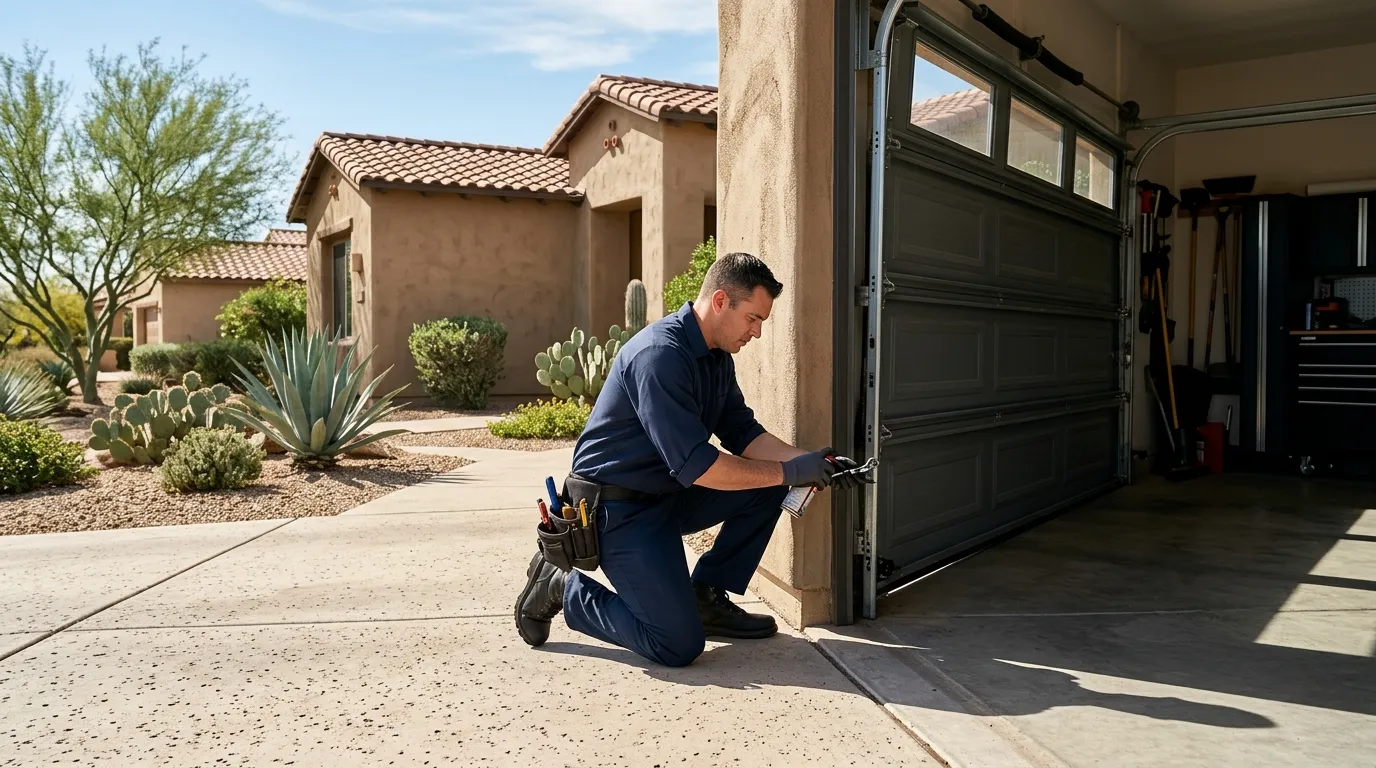
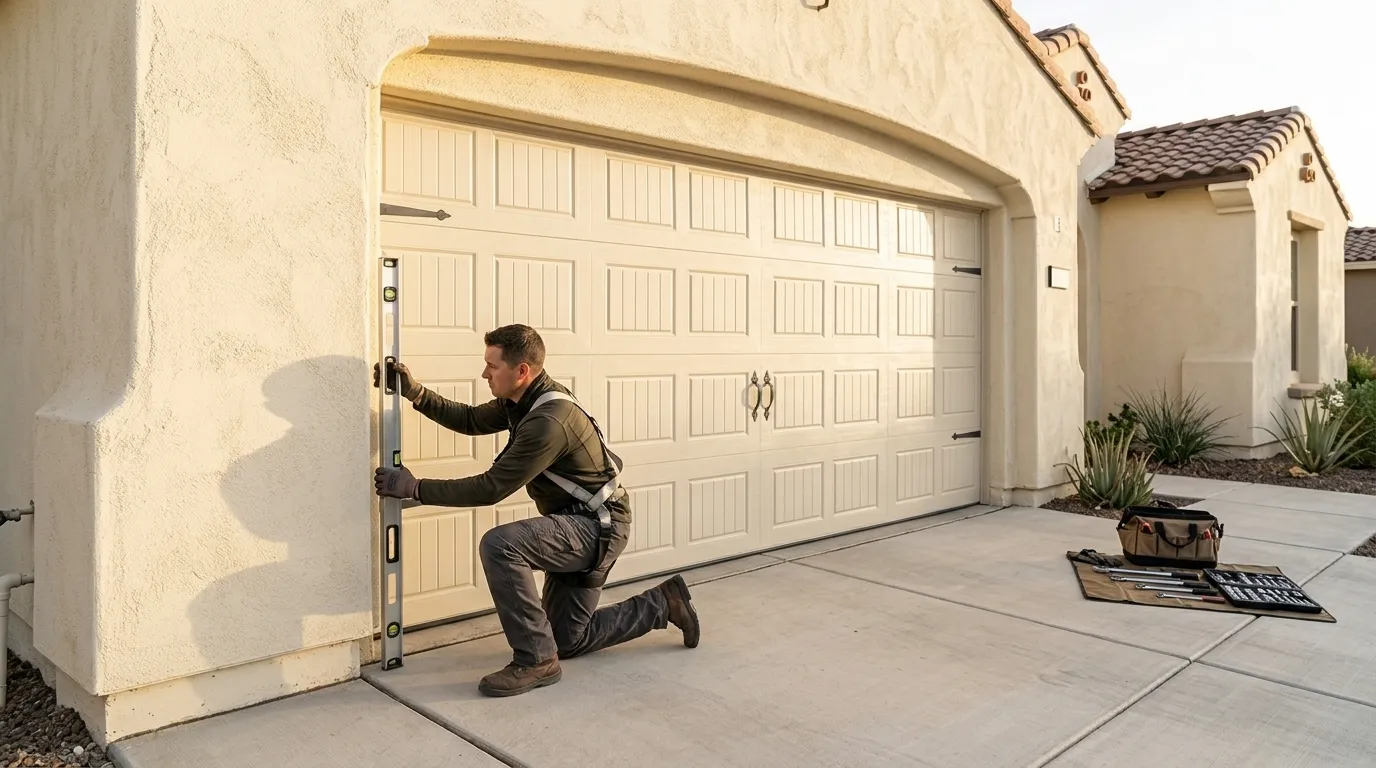
Most garage doors in Palos Verdes Estates date to the early 1960s build wave. Santa Monica Garage Door Pros travels the 17 miles to fix original hardware that's aged out.
The median home here dates to 1963, and a good share of that original construction is still standing with its original garage hardware intact. That's the thing about a neighborhood built out in one long push rather than infilled over decades - the doors, tracks, and springs that went in during the build wave often never got swapped out. Nobody replaces a torsion spring that hasn't broken yet, so a lot of these houses are still running 60-year-old lift hardware that was never designed to be serviced twice.
With only about 5,032 households in Palos Verdes Estates, this isn't a neighborhood where a repair crew sees the same handful of door models on every block like they might in a denser tract. The lots are bigger, the builds more spread out, and the hardware variety wider - but the age problem is the same house to house. A spring rated for a specific door weight in 1963 doesn't always have a direct modern equivalent, and matching it right matters more here than guessing and hoping the door balances.
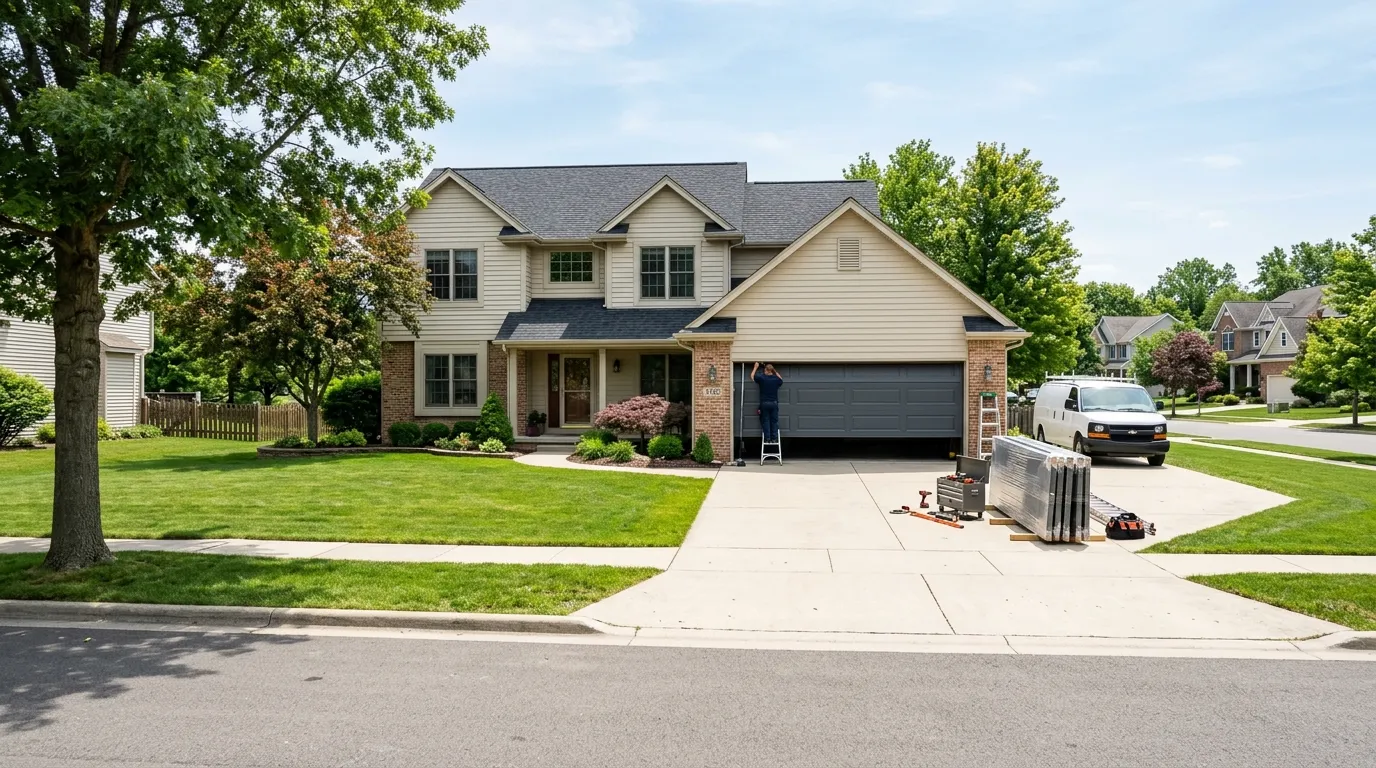
We come out from Santa Monica, about 17 miles away, so we bring the parts we expect to need based on what a 1963-era door usually takes. We don't stock a depot locally, which means an odd or discontinued part can mean a second trip.
Why This Fails Locally
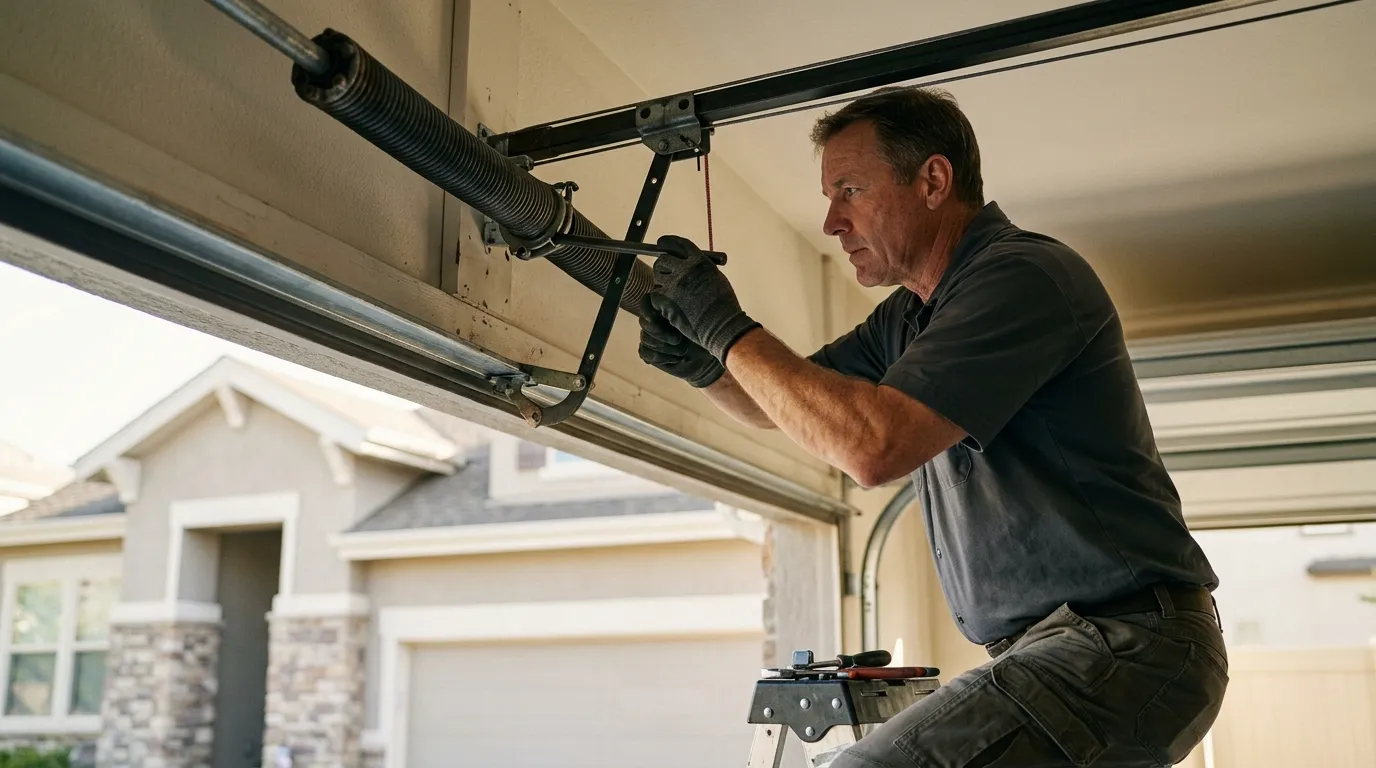
A door built to the 1963 median doesn't fail the way a 2005 door fails. Original torsion springs on older lift systems were wound to a narrower range of door weights, and decades of temperature cycling - even in this region's mild temperate band - dry out the coil lubrication and let corrosion creep into the wind. The spring doesn't snap without warning as often as people think; it usually starts sagging unevenly first, one side of the door dropping a half inch lower than the other on the way up.
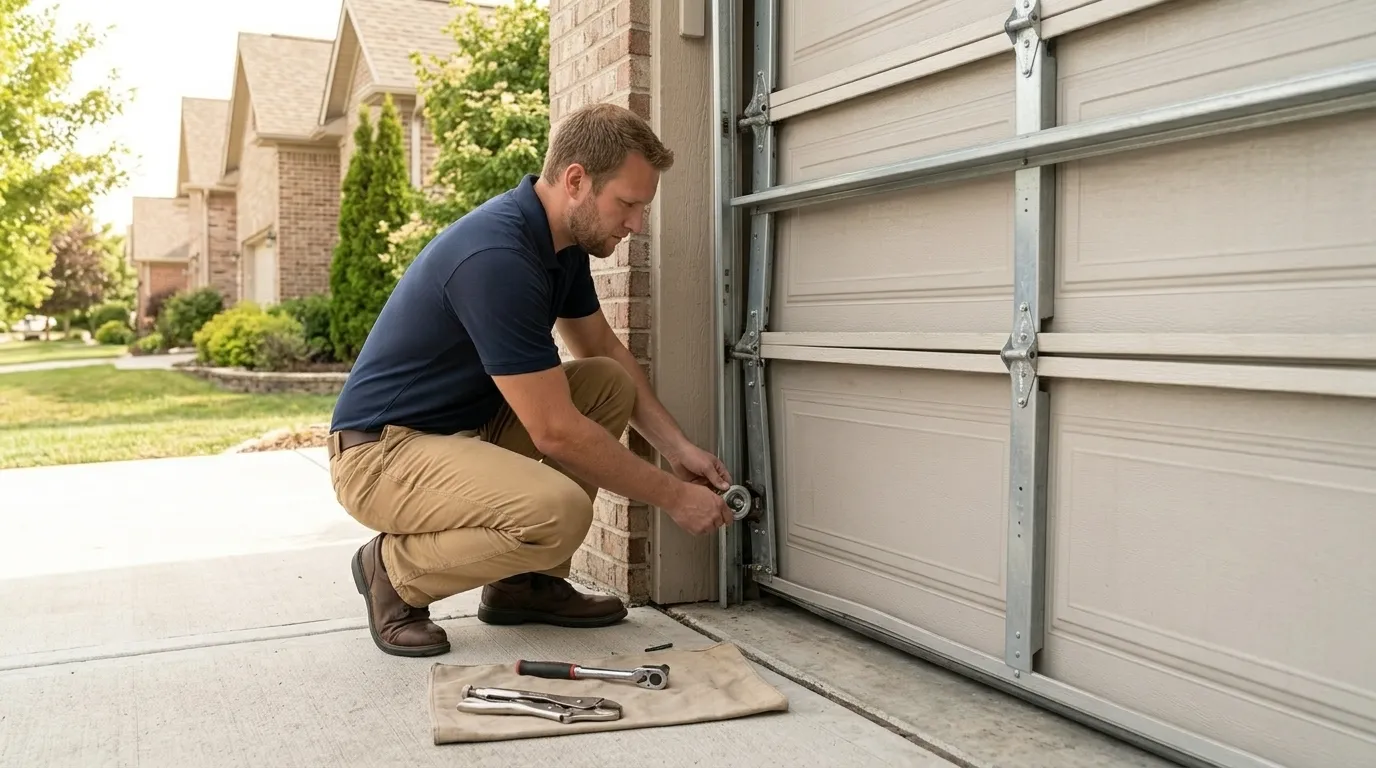
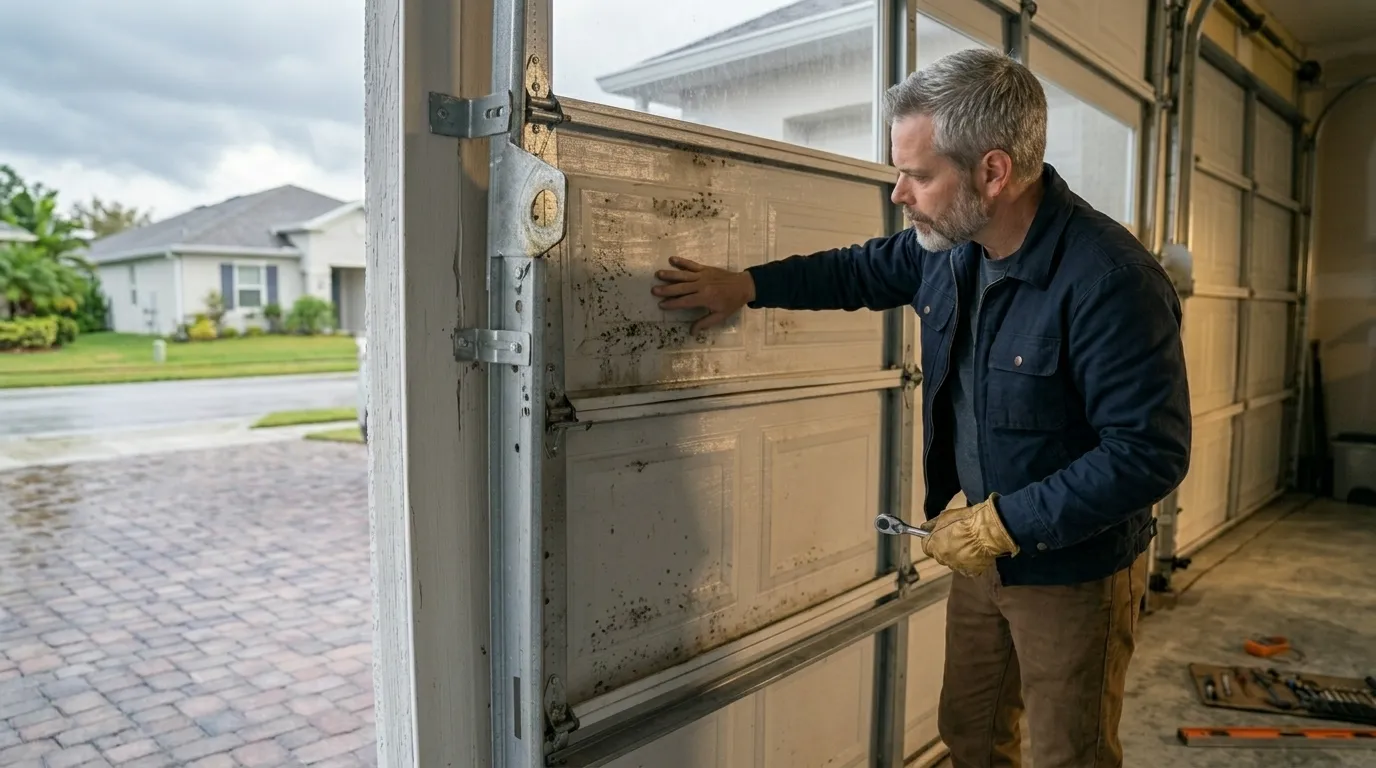
Rollers on hardware this old are almost always steel, not the nylon rollers that came standard later, and steel rollers wear the track lip down over years, not weeks. By the time an owner notices the door binding on one side, the track itself may be misaligned, not just the roller.
The area's higher median household income, part of a service-area figure of $83,538, tends to mean owners here fix things before they fail completely rather than run them to total breakdown - so we're often called for a door that's noisy or dropping, not one that's stuck shut. That's a better problem to solve, and it's usually cheaper too, but it still means matching parts to hardware most suppliers stopped making years ago.
Getting It Booked In
Because we're covering Palos Verdes Estates from Santa Monica, 17 miles out, we ask a couple of questions up front that we might skip on a closer call: roughly when the house was built, whether the door or opener has ever been replaced, and what the door is doing right now - dropping unevenly, grinding, or not moving at all. That lets us load the truck with the right spring size and roller type before we drive out, instead of diagnosing on-site and coming back a second day for a part.
We don't keep a branch or storage in Palos Verdes Estates, so same-day parts availability depends on what's already on the truck. For most 1960s-era torsion and extension spring setups we carry common sizes, but a genuinely discontinued opener or an unusual track width can mean ordering in.
Book through the service area page for Palos Verdes Estates or from the main Santa Monica repair page if you're not sure which service you need - both route to the same crew, just different starting information.
How It Shows Up
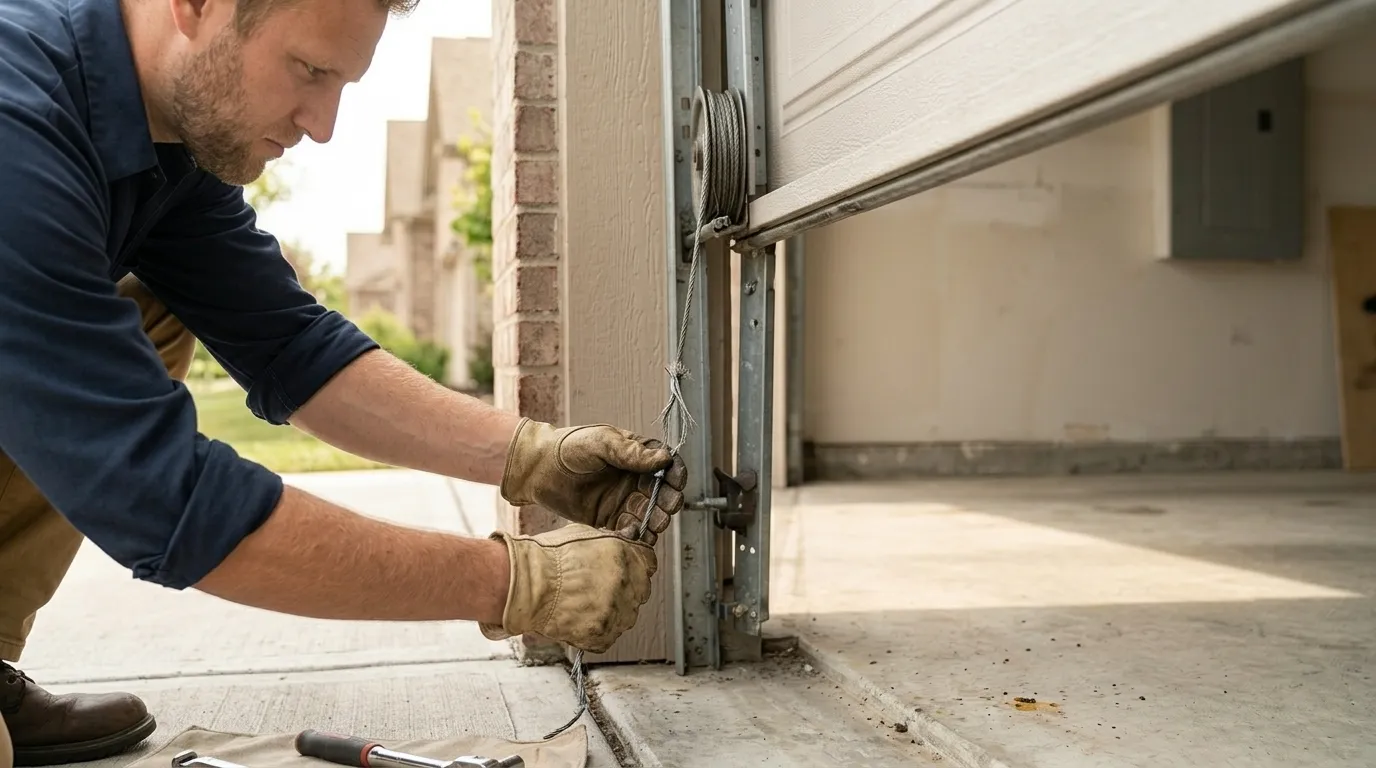
On a house built around 1963, the first sign is rarely total failure. It's the door hesitating a beat before it lifts, or one side rising faster than the other because a torsion spring has lost tension unevenly. Cables on original hardware fray from the drum outward, so a visible kink near the bottom bracket is often the last warning before a cable lets go entirely.
Openers get replaced more often than the doors themselves, since motor units have a shorter working life than a steel door panel - so it's common to find a 1990s or 2000s opener bolted to 1960s track and springs. That mismatch causes its own problems: a newer opener pulling against an old, unbalanced door works harder than it should and burns out early.
We'll tell you straight if a repair isn't worth it. Once the track is bent along its length rather than just the hardware being worn, straightening it rarely holds - replacement is usually the honest answer at that point, and we'll say so instead of billing for a fix that won't last.
How it works
From “it’s stuck” to “it’s fixed”
01
Tell us what’s wrong
Describe the symptom - won’t open, loud bang, opener runs but the door won’t move.
02
On-site diagnosis
A technician tests the door under power and by hand and finds what actually failed.
03
Clear, up-front plan
You get the fix that’s needed and what drives the cost - before any work starts.
04
Repaired & tested
The repair is done, the door is set true and tested, and the work area left clean.
Serving Santa Monica, CA - tell us what your door’s doing and we’ll take it from there.
Straight answers about garage door repair in Santa Monica. Still unsure? Ask us directly.
Is my garage door hardware original if my house was built in the early 1960s?
It's common in Palos Verdes Estates, where the median build year is 1963. A lot of houses from that wave still have their original torsion springs, tracks, and steel rollers. We check the hardware on-site rather than assume, since some homes have had partial upgrades over the years.
Do you have a branch in Palos Verdes Estates?
No. We work out of Santa Monica and drive out to Palos Verdes Estates, about 17 miles each way. We load the truck based on what you tell us when booking, since we're not stocking a local depot here.
Why does my door drop unevenly on one side?
That's usually a torsion spring that's lost tension unevenly, which is common on original hardware from the early 1960s build era common in this area. It can also be a bent track or a worn roller. We diagnose it in person rather than guess over the phone.
When is it not worth repairing an old door?
If the track is bent along its length rather than just worn hardware, straightening rarely holds for long. At that point replacement is the more honest answer, and we'll tell you that instead of charging for a repair that won't last.