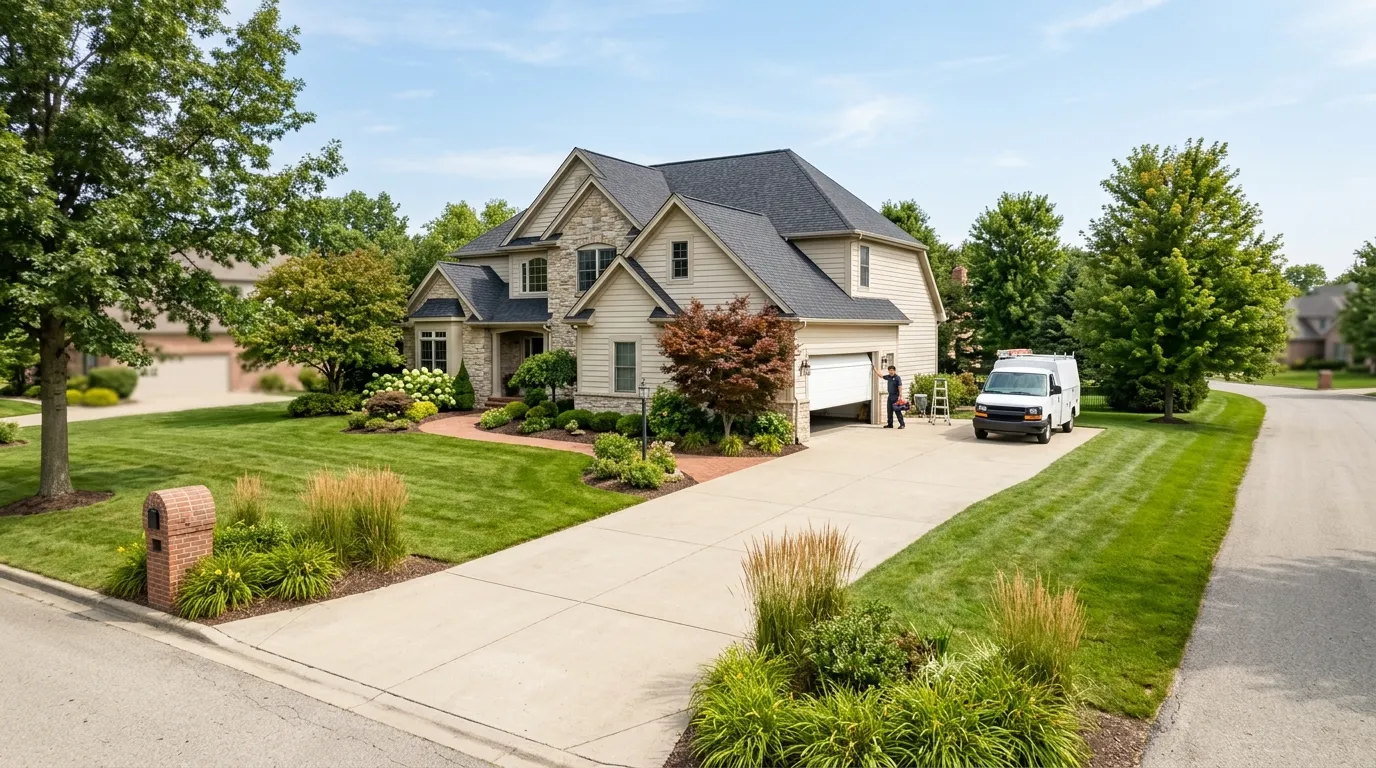
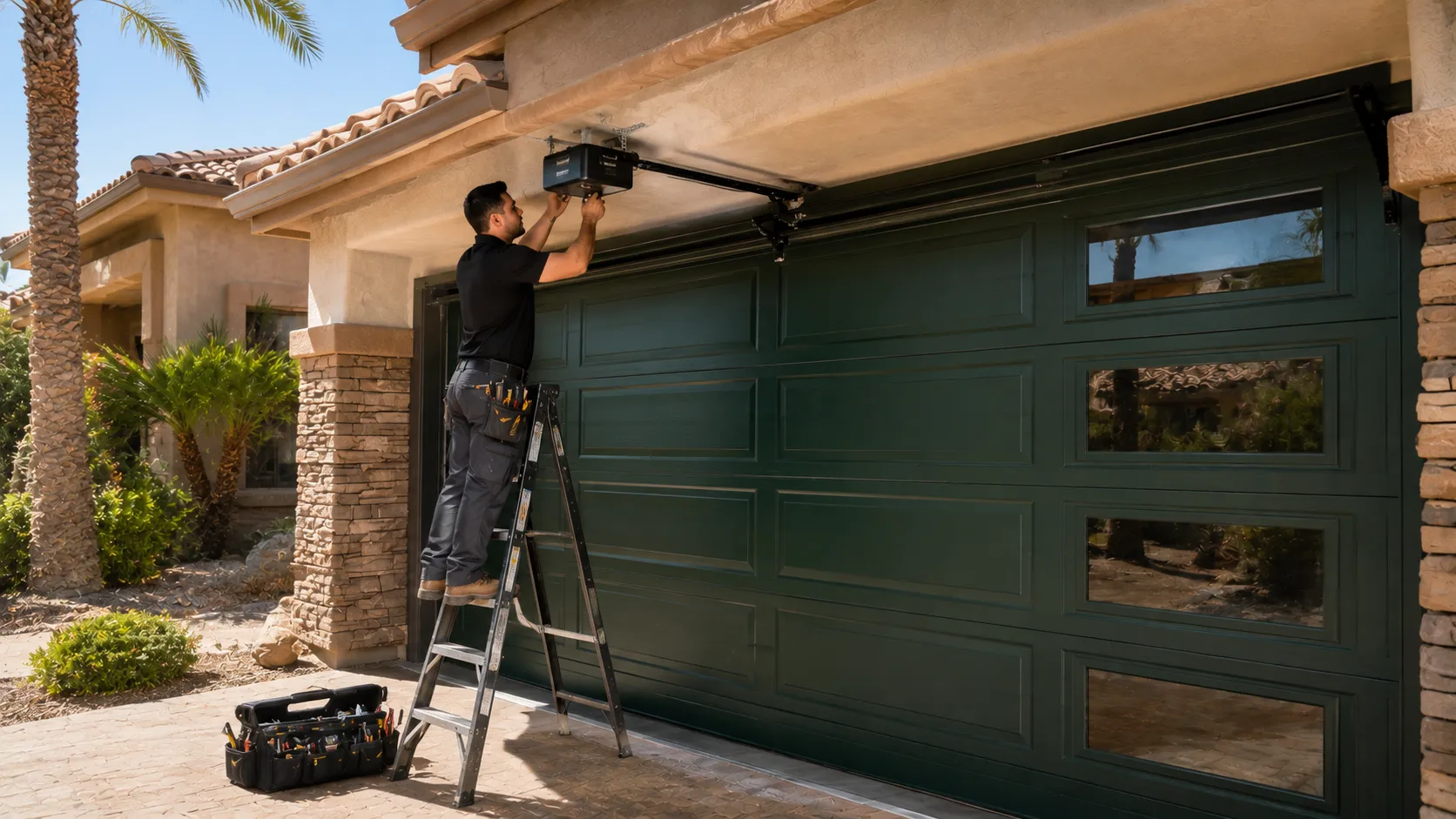
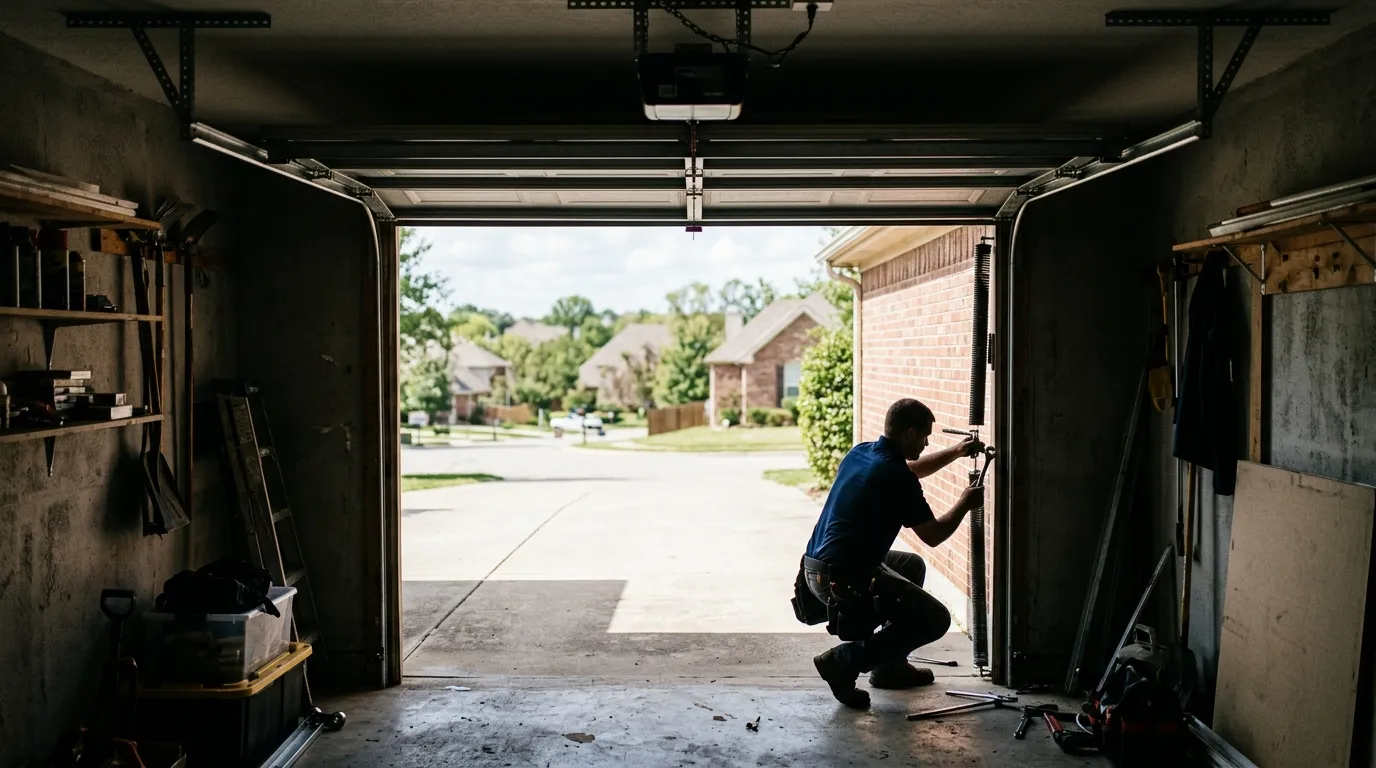
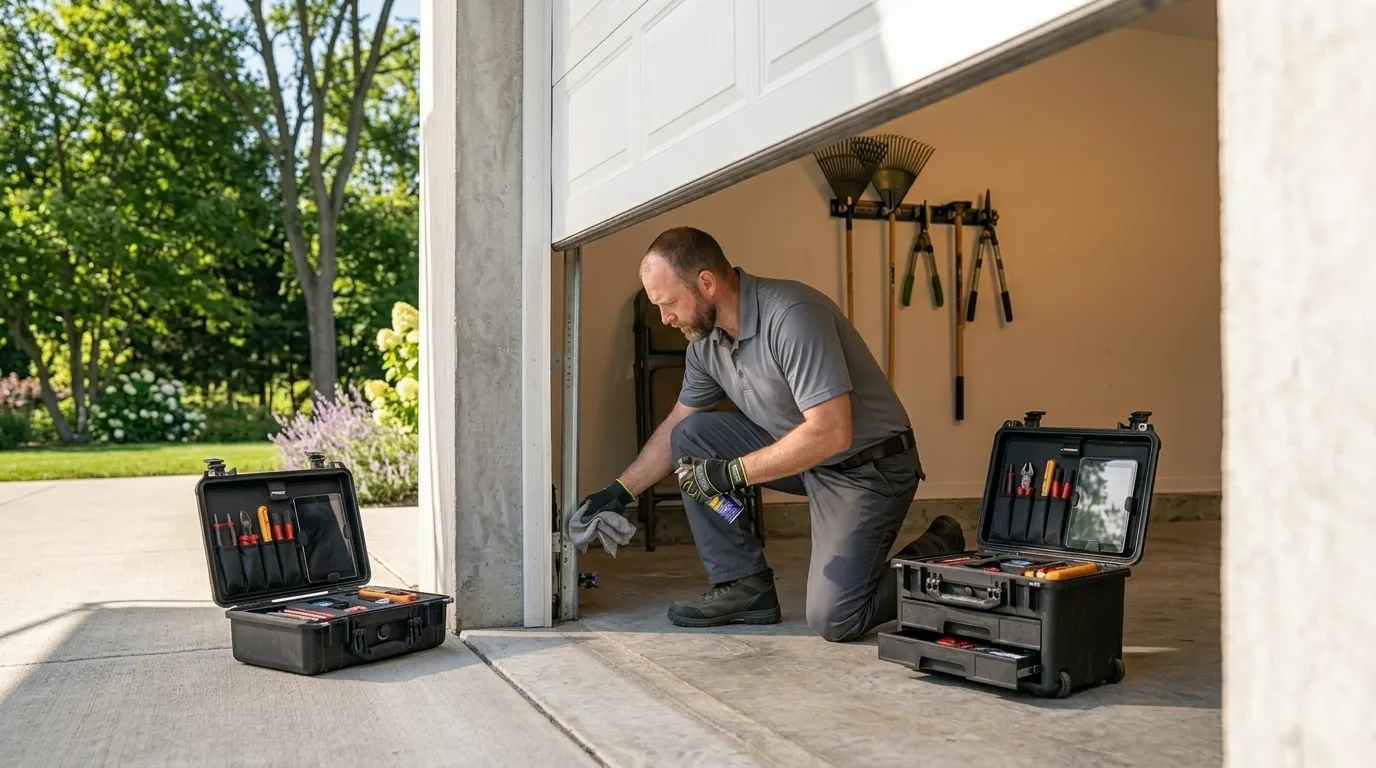
A squeak you can grease is not the same as a bang you should not touch. Most houses in this stretch of the Westside, from Sunset Park up through North of Montana, went up between 1947 and 2012, with the bulk clustered in the 1960s and 70s. That means a lot of original torsion hardware that no one in the house has ever serviced, on a spring that was sized for lighter wood panels, not the heavier insulated steel that often replaced them later.
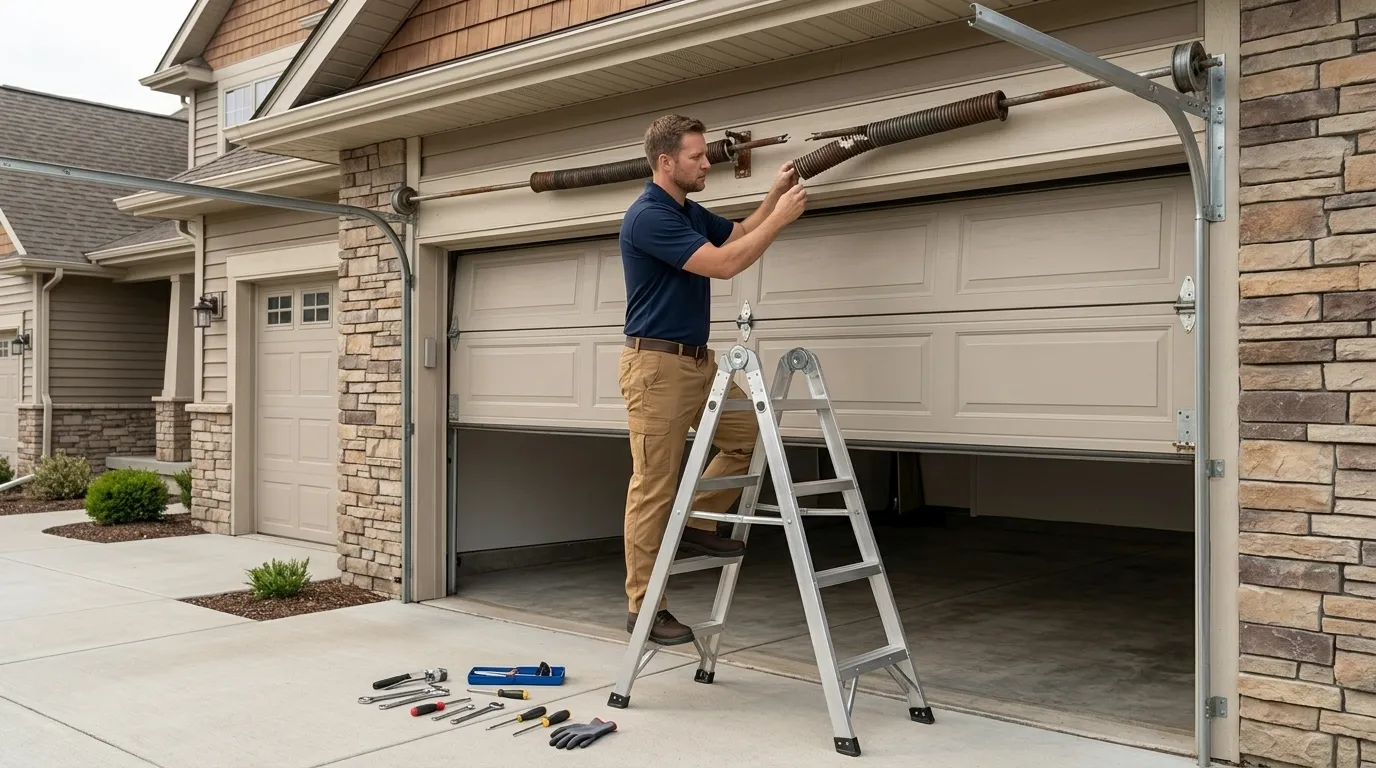
A grinding sound when the door starts to move is usually a bearing plate or a roller that's worn past the point of lubrication fixing it. That's a wrench job, not a can of WD-40 job. A loud pop followed by the door refusing to lift is very likely a broken torsion spring, and on a door this old, the winding cones and shaft can be worn enough that reusing them is a bad bet. That's the point where a torsion bar under 150 pounds of tension stops being something to open the housing on yourself.
We don't recommend homeowners touch torsion spring replacement on hardware this age. The stored energy in a spring rated for a 1960s-era wood panel door, now carrying something heavier, is not predictable, and we've seen what happens when it lets go wrong.
What Local Conditions Do
Santa Monica sits in a mild temperate band, and that cuts both ways for a garage door. You don't get the freeze-thaw cycling that cracks concrete slabs or splits wood jambs the way it does in places with real winters, so the structural failures that show up elsewhere mostly don't show up here. What you get instead is straightforward wear: forty, fifty, sixty years of a door opening and closing, springs cycling, rollers turning, with no hard freeze to slow the clock down.
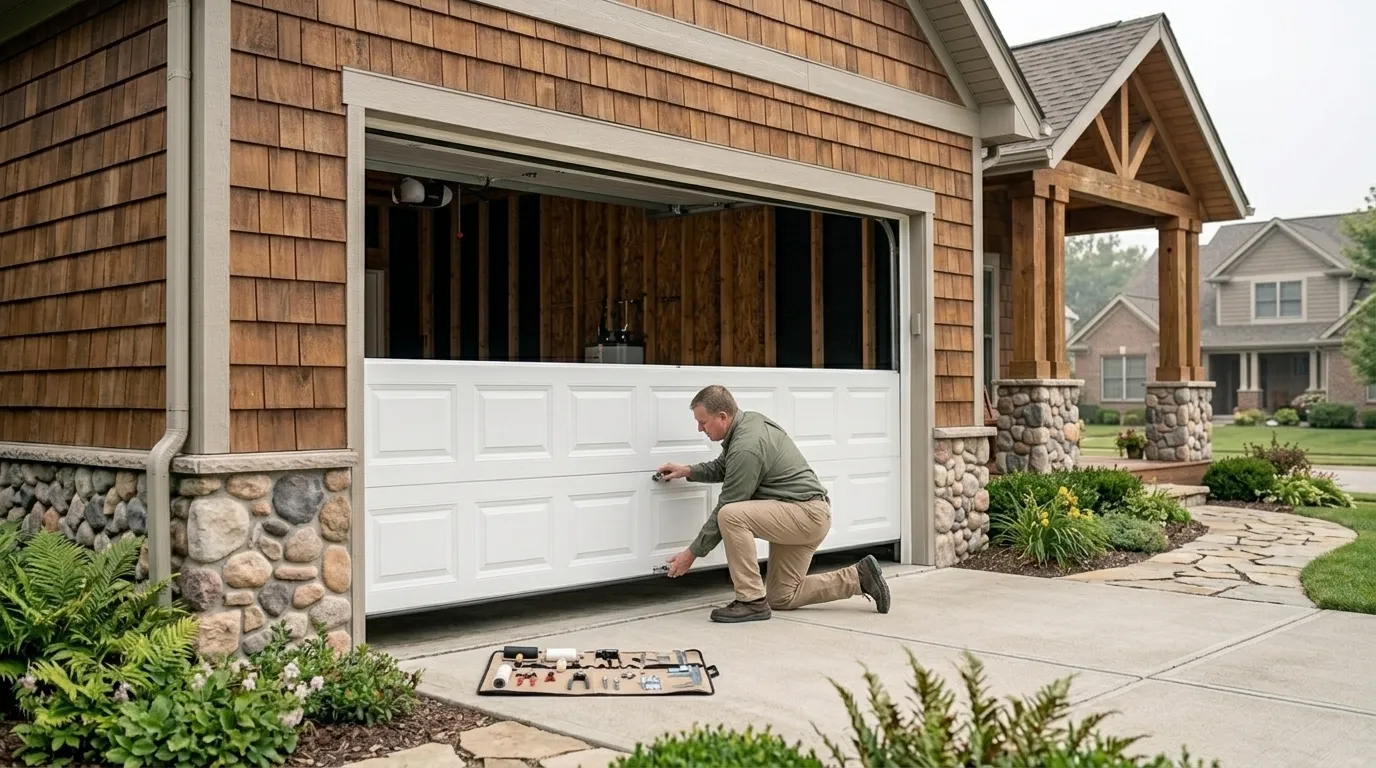
That steady mild weather also means salt air off the coast keeps working on unprotected steel year-round without a winter break to interrupt it. A rusted roller bracket or a corroded bottom bracket is a more common sound-source here than a temperature-cracked panel. If your door groans specifically on the bottom section, or the noise gets worse a few feet up from the floor, that's often where the corrosion started.
The honest limitation: we can diagnose a noise over the phone in general terms, but on hardware this old, we won't quote a fix sight unseen. Too much depends on what the last person who touched it did or didn't do.
The Situation
Across this service area, 104,855 houses are owner-occupied out of 394,216 households, and median household income runs $83,538. That matters for one practical reason: on a door built when the neighborhood's housing stock was going up in the 1960s, the math on repair versus replacement changes once you're past the second or third spring or roller replacement in a few years.
We work from Marina del Rey four miles south up to Pacific Palisades four miles northwest, and cover the stretch through Mid-City, Brentwood, and the Riviera in between. The door hardware on that 1960s-to-70s-era stock behaves the same way block to block: original torsion springs, steel that's had decades of coastal air on it, and openers that in a lot of houses have already been replaced once or twice while the door and track never were.
A noisy door on a house this age is rarely one thing. It's usually the track pulling slightly out of alignment after years of a marginal roller grinding against it, plus a spring that was never rated for the current panel weight. Treating the symptom without looking at the whole system just buys you a shorter interval before the next noise.
Leaving It Alone
Some noises are fine to live with for a while. A dry hinge that squeaks but moves smoothly isn't an emergency, and on a mild-climate door like this, that squeak can sit for months without turning into anything worse. Lubricating it yourself is a reasonable call.
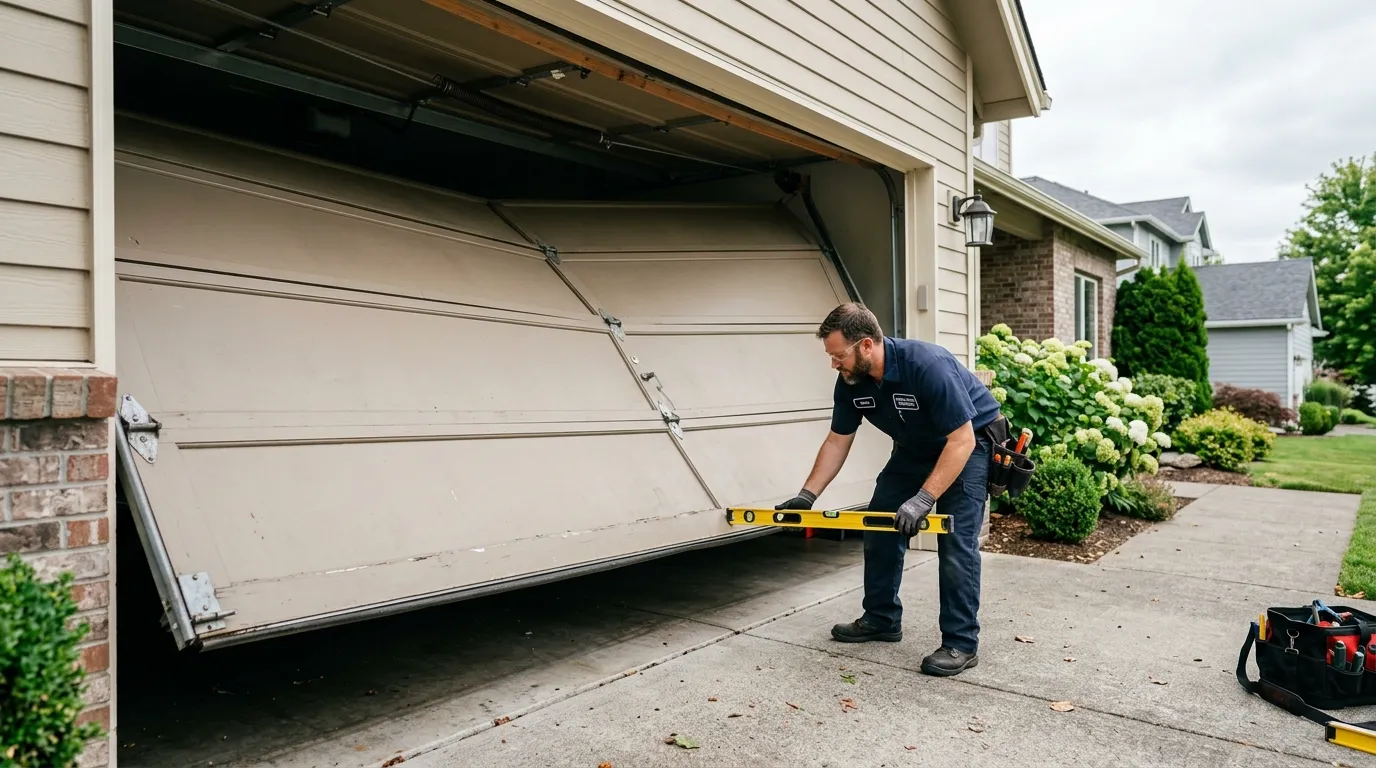
What's not fine to leave alone is anything involving the torsion spring assembly, a cable that's frayed or slipped off a drum, or a door that's started dropping unevenly on one side. On hardware from this era, deferred maintenance compounds: a slightly bent track gets worse every cycle, and a spring that's already fatigued from decades of coastal-air corrosion doesn't get safer by waiting.
We'll tell you honestly when a repair isn't worth it. If the door itself is original to a house built in the early part of that 1947-2012 window and the opener, springs, and rollers have all been patched piecemeal over the years, sometimes replacing the whole assembly costs less over five years than another round of one-off repairs. We'd rather say that up front than sell you a third spring job on a door that's telling you it's done.
How it works
From “it’s stuck” to “it’s fixed”
01
Tell us what’s wrong
Describe the symptom - won’t open, loud bang, opener runs but the door won’t move.
02
On-site diagnosis
A technician tests the door under power and by hand and finds what actually failed.
03
Clear, up-front plan
You get the fix that’s needed and what drives the cost - before any work starts.
04
Repaired & tested
The repair is done, the door is set true and tested, and the work area left clean.
Serving Santa Monica, CA - tell us what your door’s doing and we’ll take it from there.
Straight answers about garage door repair in Santa Monica. Still unsure? Ask us directly.
Why does my garage door groan more in Santa Monica than it used to?
On houses built in the 1960s and 70s, original torsion hardware wears steadily over decades. Santa Monica's mild climate doesn't freeze-crack parts, but the steady coastal air corrodes unprotected steel year-round, so a groan is often a roller bracket or bottom bracket rusting rather than a weather-cracked panel.
Is a loud bang from the garage always a broken spring?
Usually, yes, especially on a door that then won't lift. On hardware this old, a torsion spring rated for a lighter original panel can fail suddenly. Don't try to open the spring housing yourself; the tension involved is not something to guess at.
Should I repair or replace an older door in this area?
If you've already replaced the spring or rollers more than once in a few years, replacement often costs less over time than continued patching, especially on doors original to houses from the earlier end of the 1947-2012 building range. We'll look at the specific hardware before recommending either.
Do you cover areas outside Santa Monica proper?
We work the surrounding Westside area, roughly from Marina del Rey up through Pacific Palisades and inland toward Mid-City and Brentwood. Call to confirm coverage for your specific address.