24/7 Emergency Service Open 7 days · 7am–8pm Serving Santa Monica, CA & nearby
(424) 563-5926
Santa Monica, CA

Here's What We Check When We Show Up in Santa Monica

A Santa Monica service call covers diagnosis, spring and cable checks, track alignment, and opener testing on doors dating from the 1960s in coastal climate.

Here's What We Check When We Show Up in Santa Monica

When It Stops Being a DIY Job

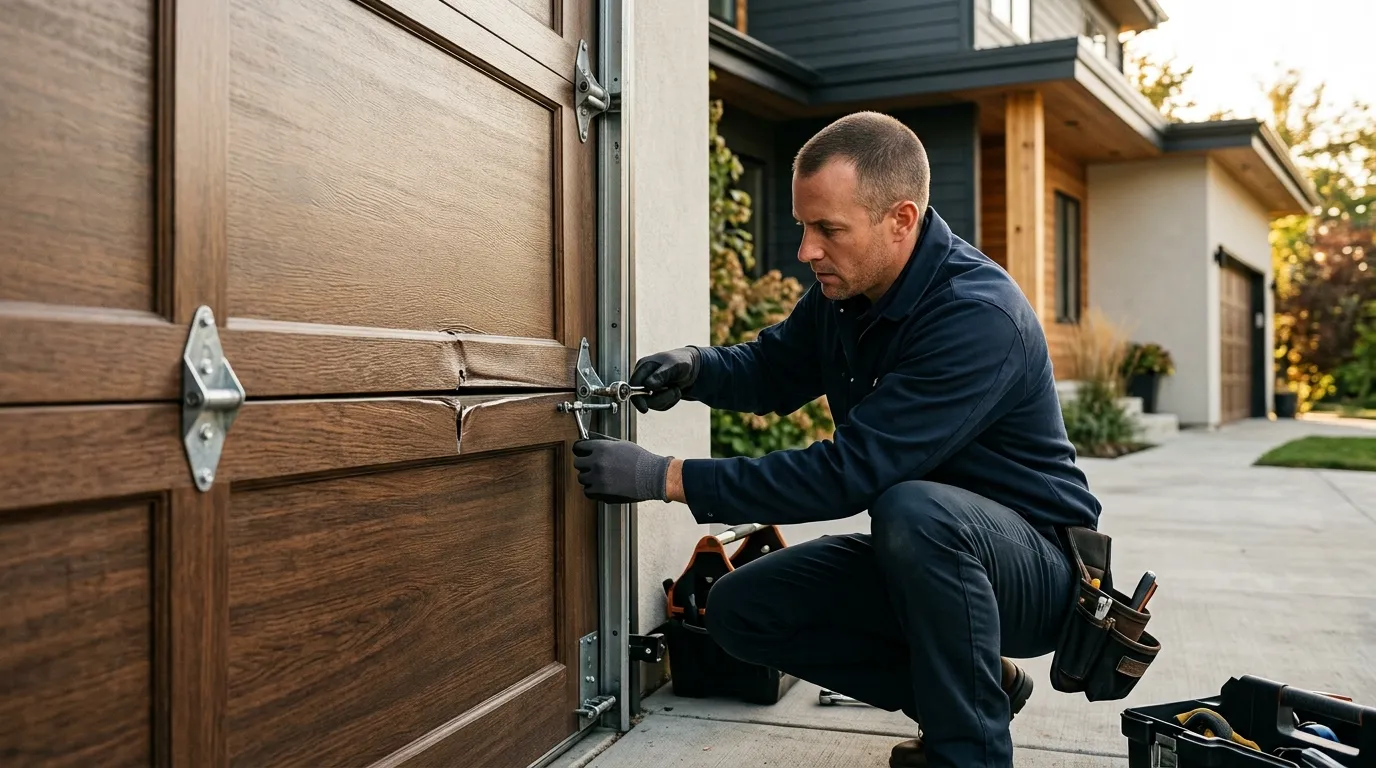
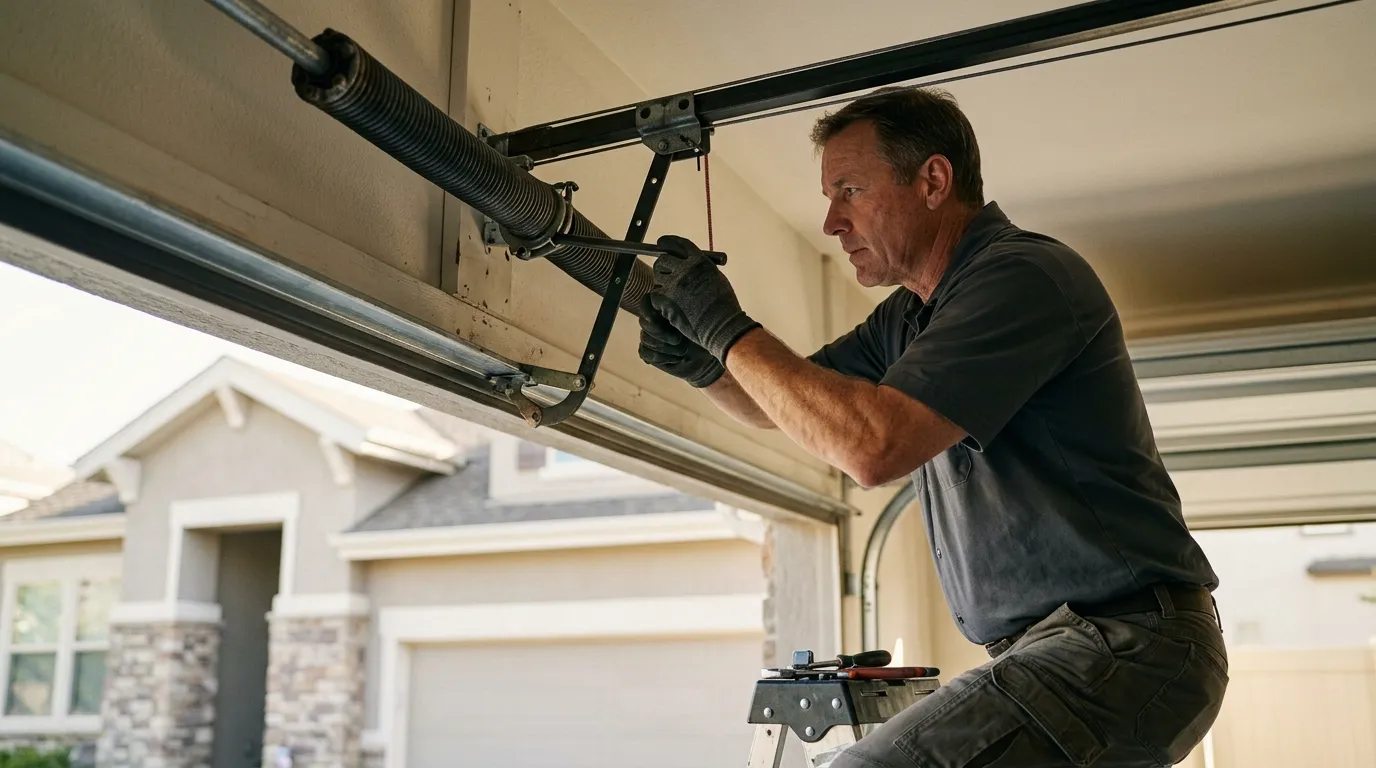
Housing in this area went up mostly between 1947 and 2012, with the median landing around 1963, and most of what we see on a call is original 1960s-70s hardware still hanging on the same track it came with. That matters because a torsion spring or an extension spring from that era isn't the same part you'll find at a hardware store today - the wind count, the shaft diameter, sometimes the whole bracket layout is different from current stock. Swapping a roller yourself, or tightening a loose hinge, is fine. Pulling a wound torsion spring off its cone, or trying to re-tension one, is not - those springs store enough energy to break a hand or a face, and on a door this age you don't always know how much tension is actually left in it from thirty or forty years of cycling. If the door is sagging on one side, if a cable has started to fray, or if the opener is straining and reversing on its own, that's the line. Past that point you're not saving money by skipping the call, you're gambling with a spring that was wound before most of the current owners moved in.

What Local Conditions Do

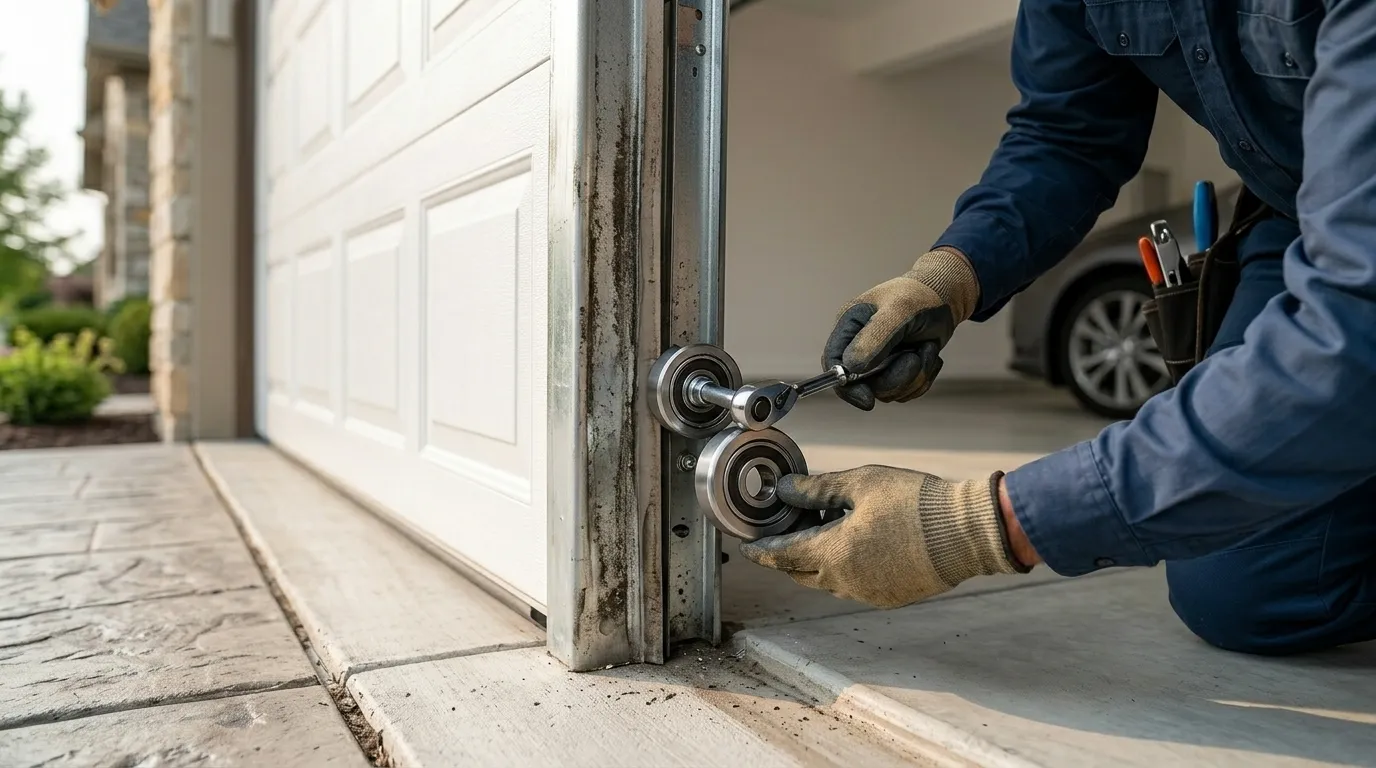
This stretch of the coast sits in a mild temperate band, and being a few miles from the water - Marina del Rey is about four miles off - means the marine layer sits on hardware more than the temperature swings do. It's not heat that ages a door here, it's the damp air rolling in most mornings. Galvanized track and springs hold up fine for years, then corrode fast once the coating wears through, usually right at the roller stems and the bottom hinges where moisture sits longest. We see pitting and rust bloom on doors that are otherwise in decent shape mechanically, because the salt air gets into the coating before anyone notices. That's different from what an inland shop deals with, where dry heat and dust are the bigger issue. On a service call here, we're checking hardware condition as much as adjustment - a roller that looks fine from the driveway can be seized on the stem underneath, and that's a coastal-air problem more than an age problem, though on a house from the 1960s you often get both at once.

The Situation

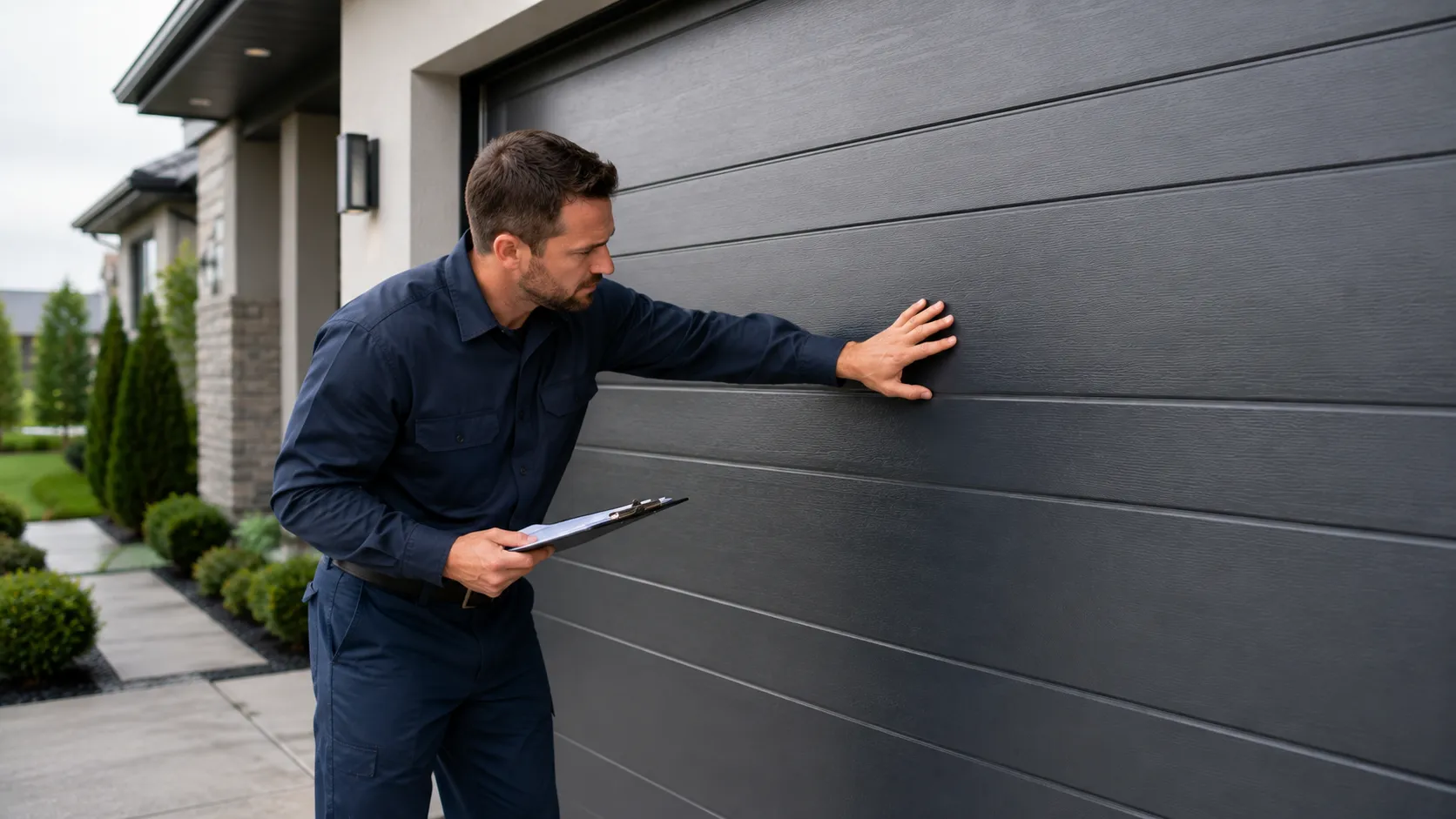
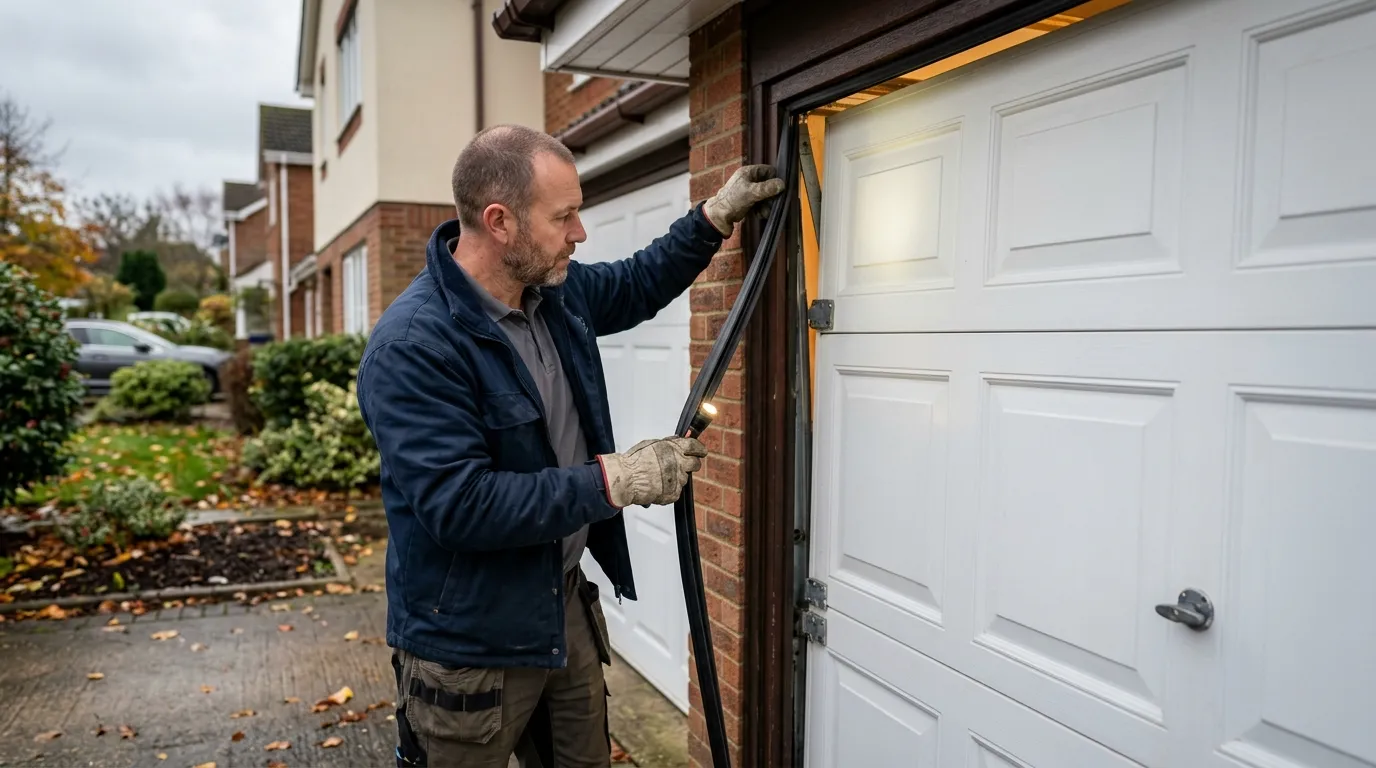
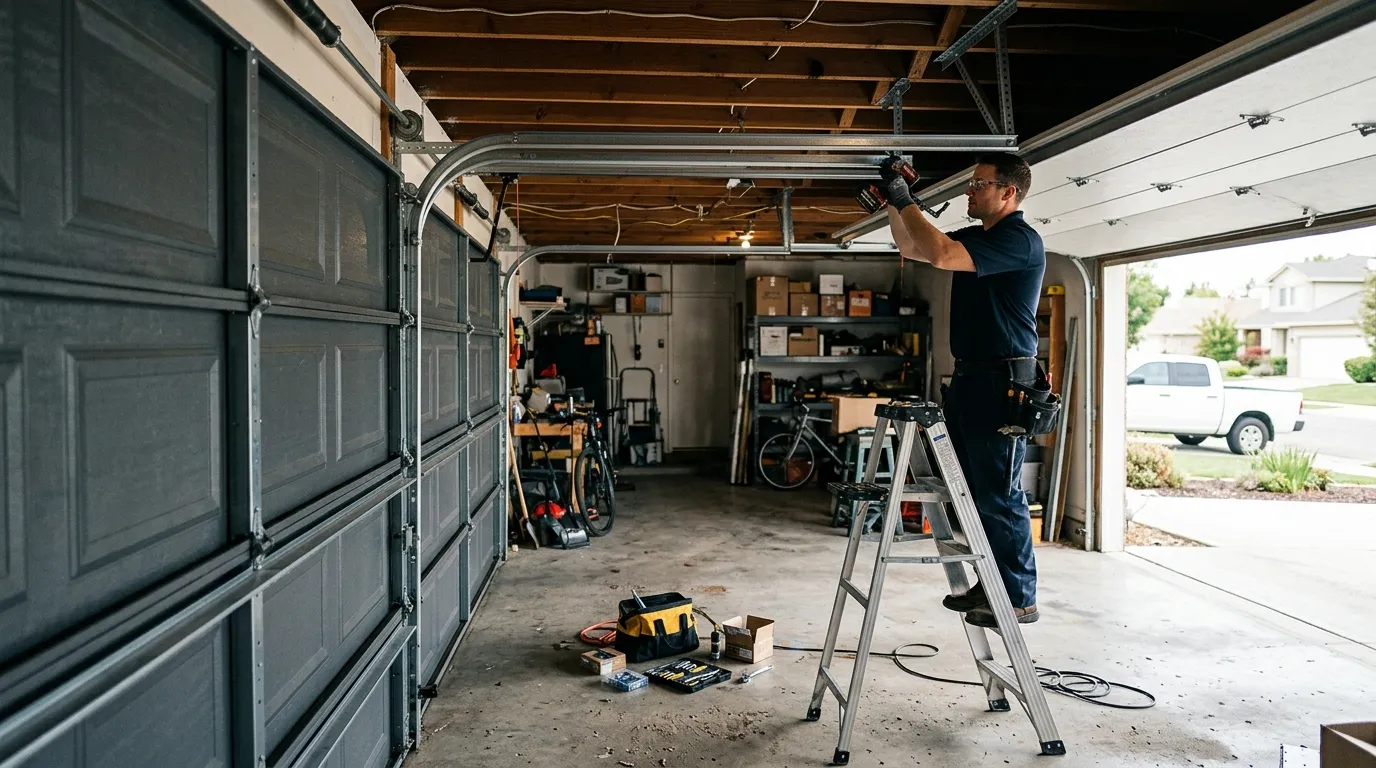
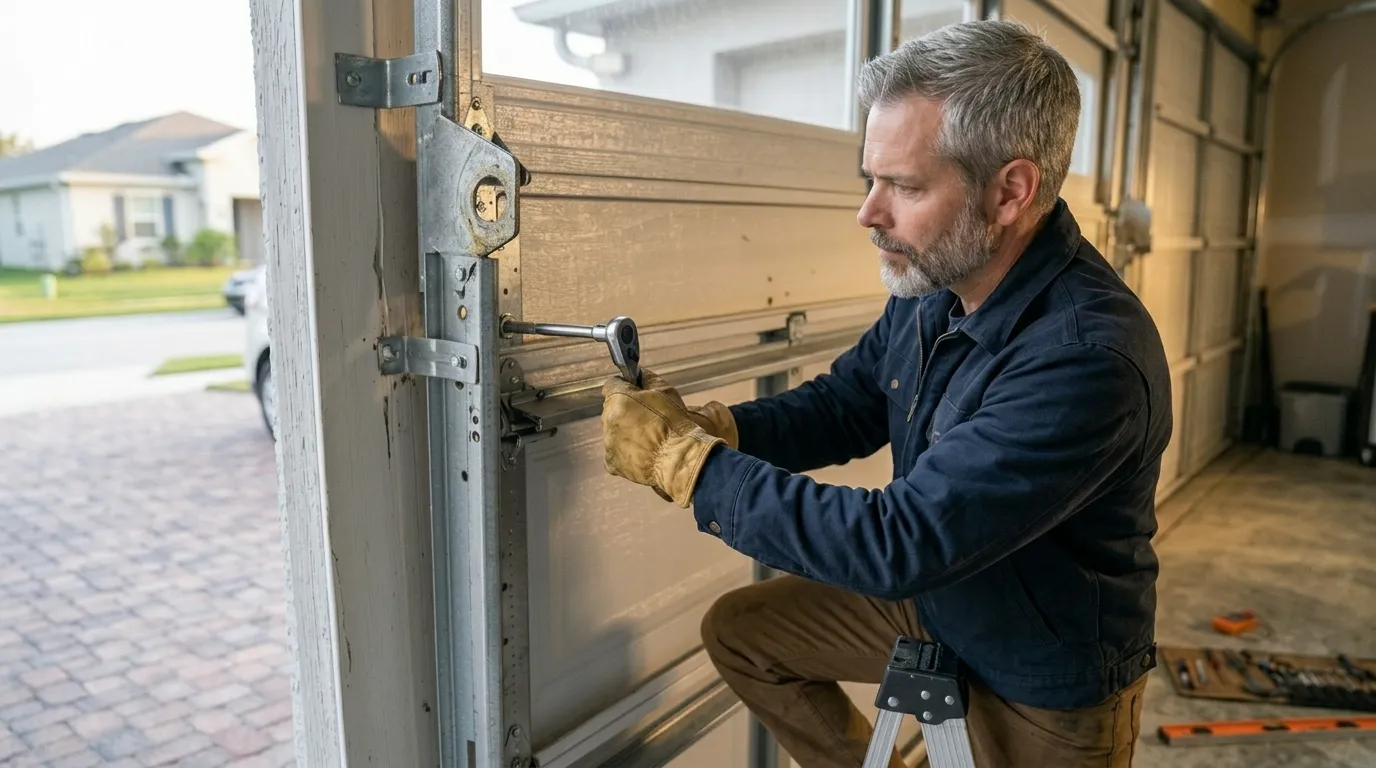
A real service call starts with the door cycling a few times while we watch the balance - does it drift up or down on its own with the opener disconnected, which tells us where the spring tension actually sits right now, not what it was set to originally. From there we check cable wear at the drum, roller condition at each hinge point, track alignment top to bottom, and the opener's force and limit settings, since worn springs make an opener work harder than it's rated for and that shortens motor life. On a house from the 1960s-70s stock that makes up most of this area, we're also looking at the weatherstrip and bottom seal, since original doors weren't built to the same sealing standard as anything installed in the last fifteen years. We test the safety reverse and the photo eyes if the opener has them, because a lot of the original openers on doors this age either lack that feature entirely or have it wired around. What we don't do is tighten a bolt and call it fixed if the spring underneath is close to failing - we'll tell you what's actually wearing out, even if it's not the part you called about.
Leaving It Alone

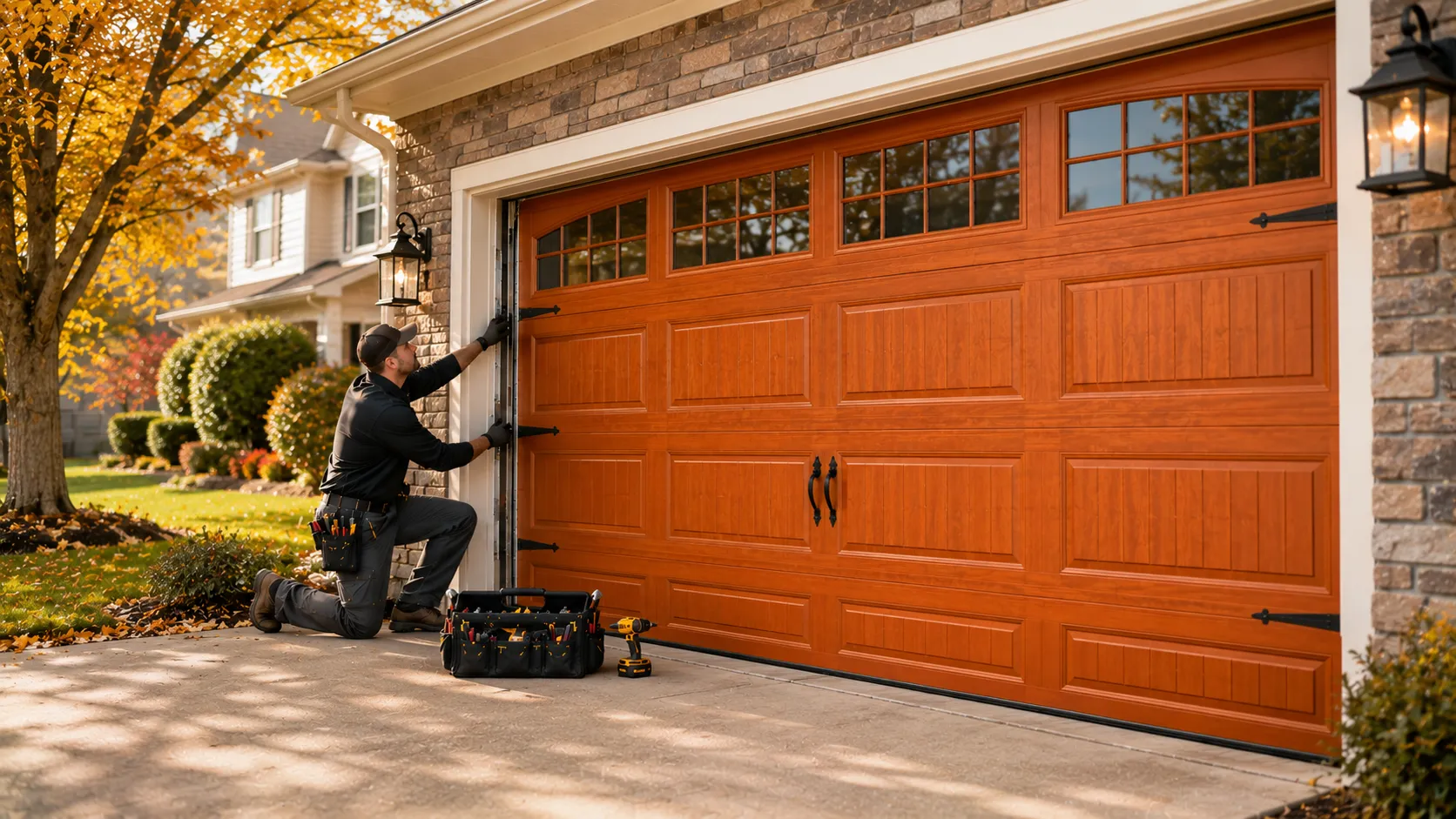
Here's the honest part: on a door built anywhere near the median 1963 date, we sometimes get to a panel or a hinge bracket that's simply not made anymore, and a replacement part has to be sourced or fabricated, which takes longer than the same fix on a newer door. If a torsion spring has already stretched or a track is bent badly enough that it's pulling out of square, patching that spot usually buys a few months, not a fix. At some point on an original door from this era, putting more money into hardware that's outliving its design life stops making sense, and we'll say so instead of running up a bill. We don't do full structural framing work if a door opening itself has settled or shifted - that's a job for a contractor, not a garage door call. And we won't quote a repair over the phone sight unseen, because on doors this old the actual cause of a symptom is rarely the obvious one until someone's hands are on the spring and the track.

How it works

From “it’s stuck” to “it’s fixed”

Tell us what’s wrong - Santa Monica garage door service

Tell us what’s wrong

Describe the symptom - won’t open, loud bang, opener runs but the door won’t move.

On-site diagnosis - Santa Monica garage door service

On-site diagnosis

A technician tests the door under power and by hand and finds what actually failed.

Clear, up-front plan - Santa Monica garage door service

Clear, up-front plan

You get the fix that’s needed and what drives the cost - before any work starts.

Repaired & tested - Santa Monica garage door service

Repaired & tested

The repair is done, the door is set true and tested, and the work area left clean.

Serving Santa Monica, CA - tell us what your door’s doing and we’ll take it from there.

48areas covered
How we work

What to expect

Diagnosis firstEvery visit starts by finding what actually failed - not a pre-written parts list.
The right part for the doorSprings and openers matched to the door’s weight and age, so the fix holds up.
Straight answersWhen a repair makes more sense than a replacement - or the reverse - you hear it plainly.
Clean, careful workTension released safely, hardware set true, the door tested under power before we leave.
Questions

Frequently asked

Straight answers about garage door repair in Santa Monica. Still unsure? Ask us directly.

Do you work on the original doors that came with older Santa Monica houses?

Yes. A lot of what we see on calls here is original hardware from houses built in the 1960s and 70s, since that's the bulk of the housing stock in this area. Parts availability varies - some brackets and panels need sourcing rather than a same-day swap, and we'll tell you upfront if that's the case before starting anything.

Why does my door feel stiffer or noisier than it used to, without any obvious damage?

Coastal air corrodes roller stems and hinge points from the inside before it shows on the surface, especially on galvanized hardware that's been cycling for decades. That's a common cause of stiffness and noise here that isn't about the spring or the opener at all, just worn metal-on-metal contact where the coating has thinned out.

Is a service call just an inspection, or do you fix things the same visit?

Most issues we find during the check - a worn roller, a misaligned track, an opener force setting - get corrected the same visit. Anything needing a sourced part for an older door, like an original panel or a discontinued bracket, may need a follow-up once the part is in.

How do I know if my door needs replacing instead of another repair?

If the spring, track, and panel are all showing wear at the same time, or if hardware for the specific model is getting hard to source, another patch repair usually isn't worth the cost. We'll walk you through what's failing and let you decide, rather than defaulting to either option.

Ready to get your garage door sorted?

Tell us what it’s doing and where you are in Santa Monica - we’ll take it from there.

Request a QuoteCall