Springs, Torsion Hardware, and the Santa Monica Housing Stock
Santa Monica garage door spring repair for houses built 1947-2012, sized to 1960s-70s torsion hardware, in a mild climate that rarely sees a hard freeze.
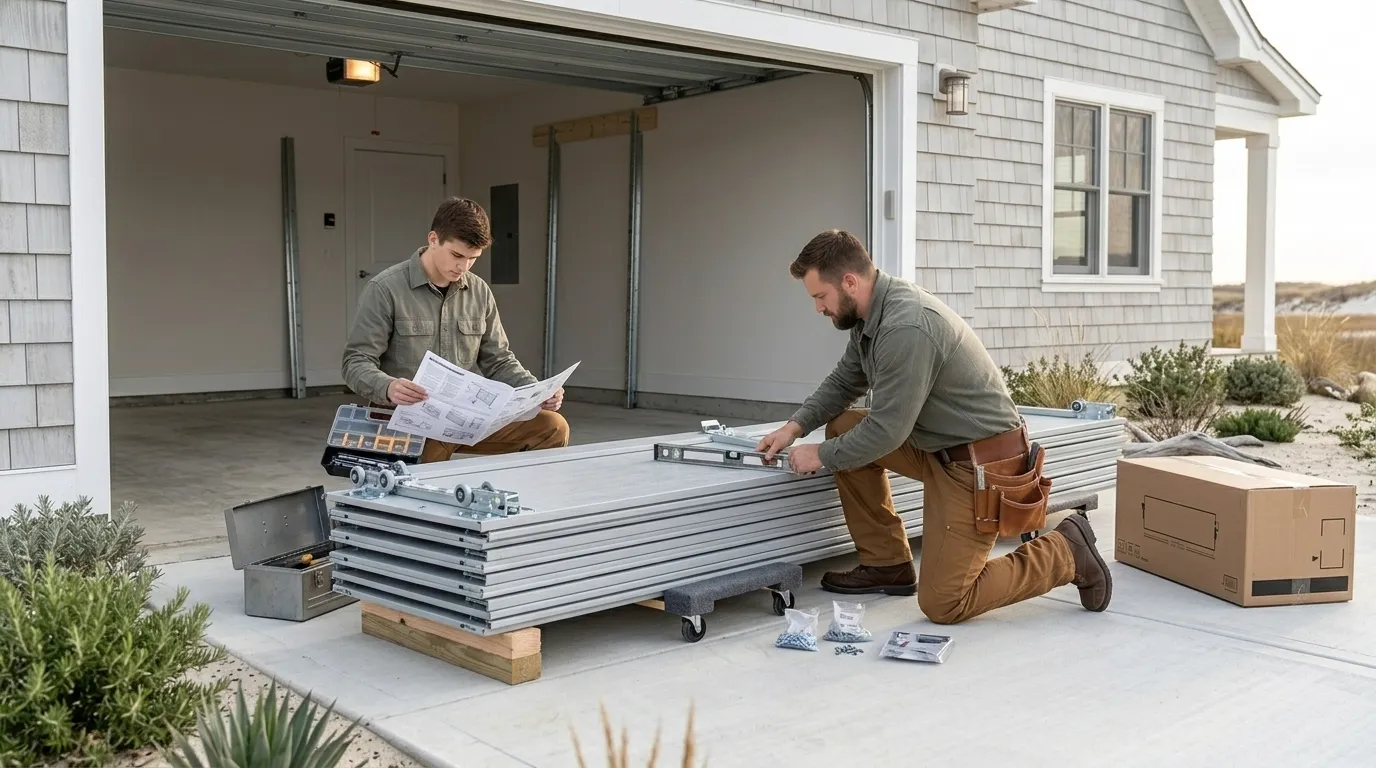
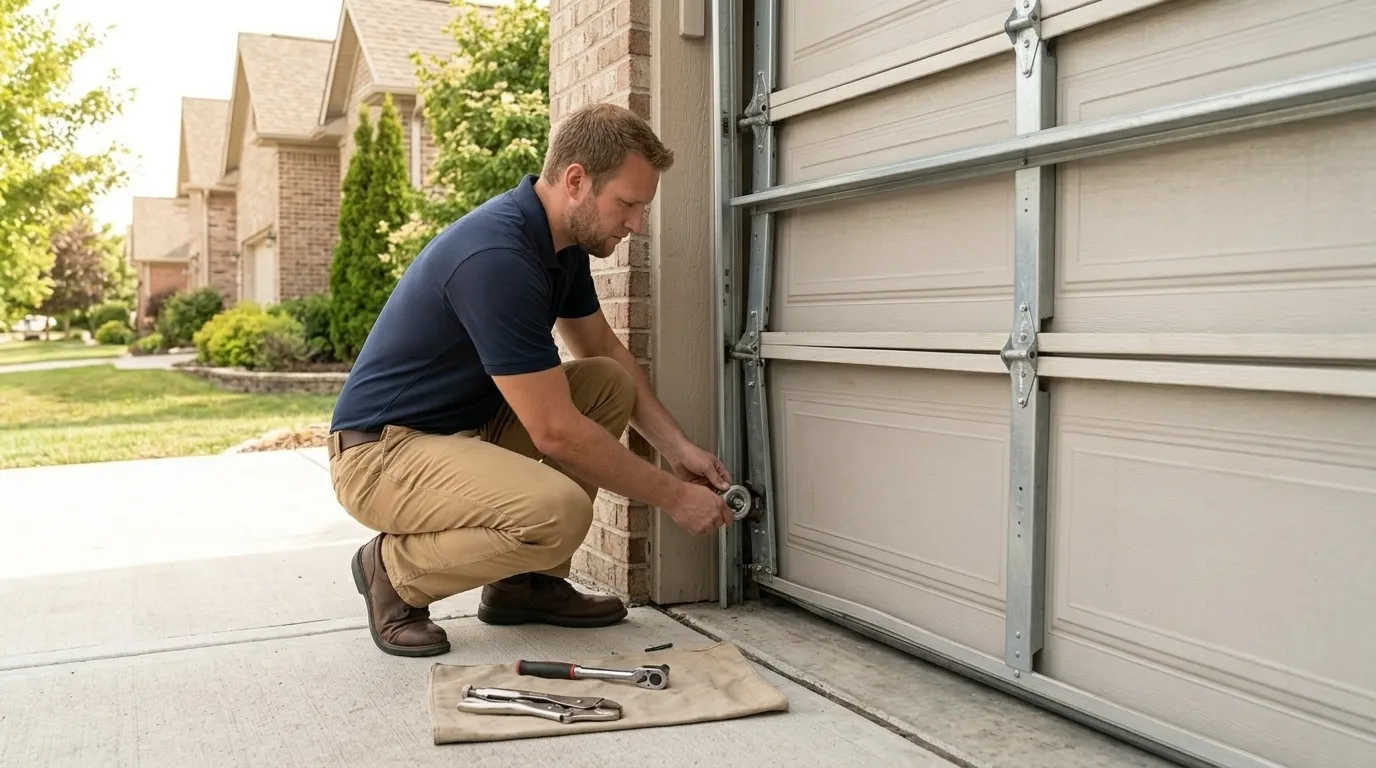
A torsion spring holds enough stored energy to snap a wrench out of your hand or take off a finger, and that doesn't change based on where the house sits. What does change here is what's on the bar. Houses across this service area went up mostly between 1947 and 2012, with the median landing at 1963, and a lot of that means original torsion hardware still doing the job it was installed to do decades ago. That's not a spring you want to guess at. Winding cones, the size of the wire, the length of the bar - all of it varies by door weight and era, and a mismatched replacement spring either won't lift the door or will over-cycle and fail again in months.
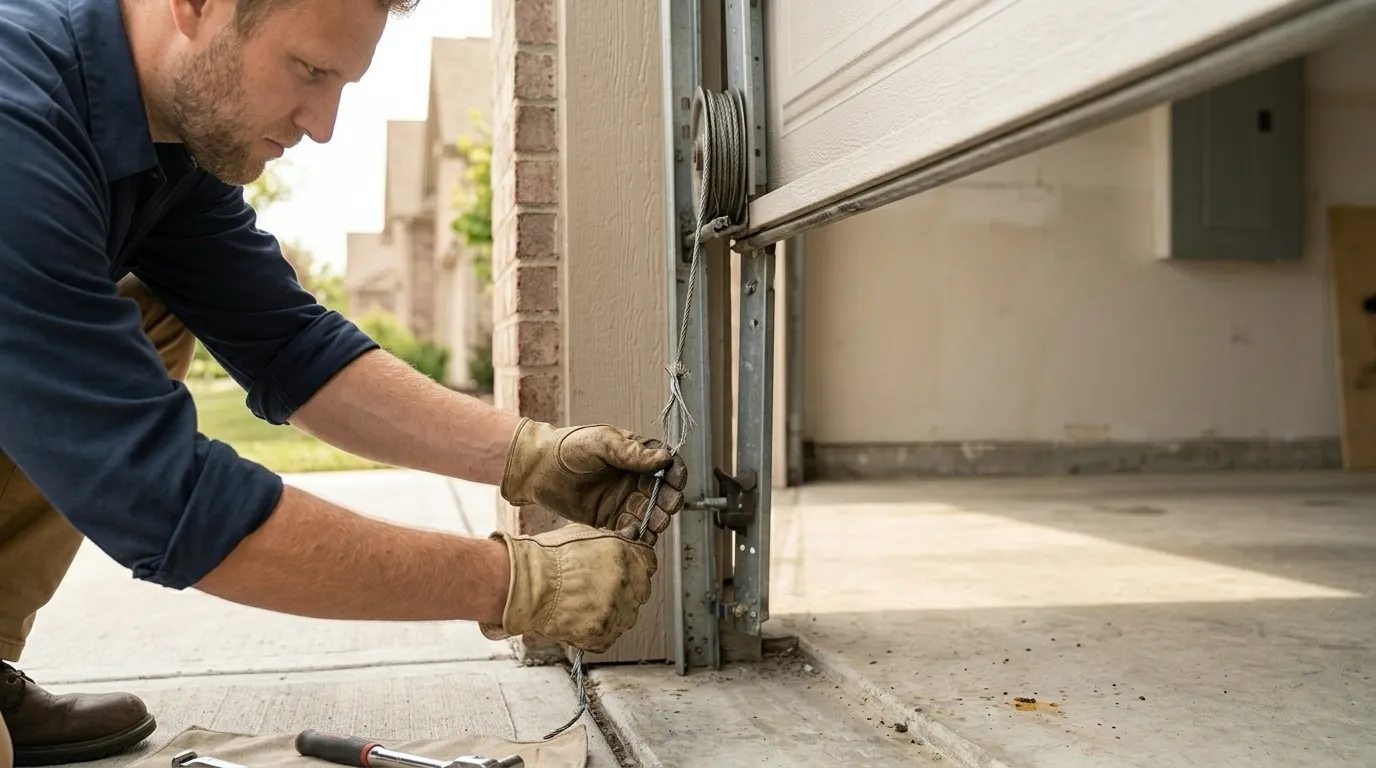
We'll say this plainly: if the door has a single torsion spring across the top and it's broken, that's a call, not a project. If it's a pair of extension springs on the side rails and one has stretched or a cable's come off a drum, that's still a two-person job with the door propped and the power disconnected. One honest limit on our end - if the spring size is uncommon for an older barrel-wound door, we sometimes need a day to source the exact part rather than force a close-enough substitute onto the shaft.
What Local Conditions Do
This is a mild temperate climate, and that matters more than most homeowners assume. In places that see hard freeze-thaw cycles, steel springs contract and expand with the cold, and that thermal stress is a real contributor to sudden breaks in January. That's not the failure pattern here. A mild climate doesn't put a spring through that kind of repeated contraction, so when a spring lets go in this area, cold isn't usually why.
What is usually why: cycle count and age. A torsion spring is rated for a number of open-close cycles, typically somewhere in the 10,000-to-15,000 range depending on wire gauge, and it doesn't care whether those cycles happened in a cold snap or a warm afternoon - it just wears down. Given a median build year of 1963 across the housing stock here, a meaningful share of the springs still in service are old enough that their rated cycle life is the real countdown, not the forecast. That's the honest local read: skip the cold-weather story, watch the age and the wear on the coil instead.
The Situation
This service area covers 394,216 households, with 104,855 of those owner-occupied - houses where the person calling about a broken spring is usually the one who'll be living with the fix. Median household income across the area sits at $83,538, and at that income level most owners we talk to choose a full torsion-and-opener update over a patched repair once the original hardware from a 1960s or 70s build starts showing its age, rather than replacing just the one part that failed.
The area itself sits close to a cluster of nearby communities - Marina del Rey about four miles off, Culver City around six, Beverly Hills roughly seven - and the housing built in the decades after the 1940s through the 2000s runs a similar mix of door sizes and torsion setups across that stretch. None of that changes the physics of a spring, but it does mean the parts and door weights we're pulling up to are fairly consistent from block to block, which keeps a service call from turning into guesswork on arrival.
Leaving It Alone
A broken spring doesn't fix itself, and running the opener against a dead spring is the fastest way to burn out the motor or strip the drive gear - the opener isn't built to lift the door's full weight on its own. Left alone, a single broken spring on a two-spring torsion setup also puts the whole load on the remaining spring, which then fails sooner than it would have otherwise.
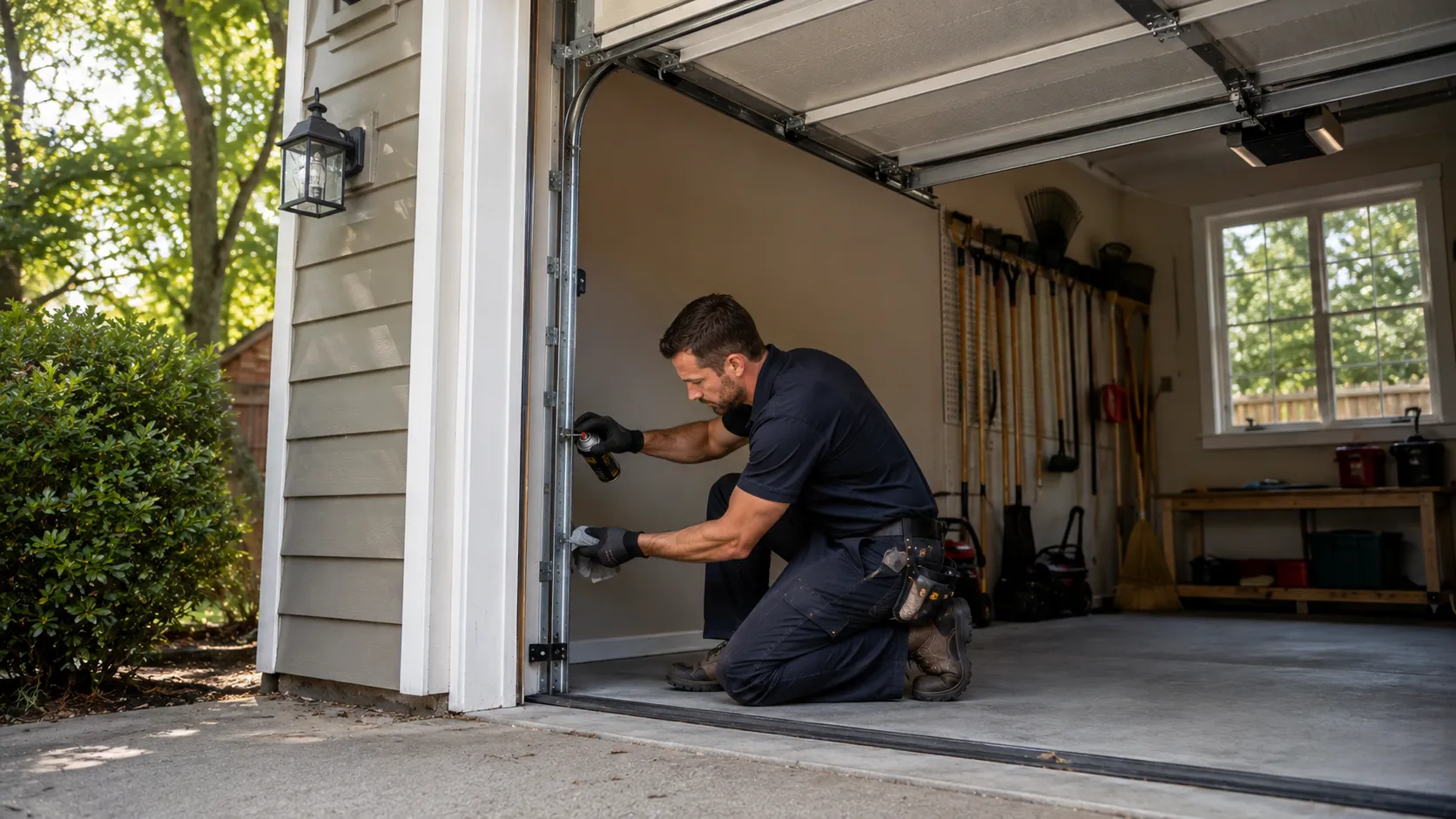
There's also a point where repair stops making sense. If the door is old enough that the drums are worn, the track is bent from years of an unbalanced spring pulling it sideways, or the springs are an obsolete size for a door frame from the earlier end of that 1947-2012 build range, patching one part just delays the next failure. In that case, replacing the spring set and hardware together costs less over time than a string of one-off fixes. We'll tell you when we think that's where you are - we'd rather lose a smaller repair ticket now than have you calling again in three months for the other spring.
How it works
From “it’s stuck” to “it’s fixed”
01
Tell us what’s wrong
Describe the symptom - won’t open, loud bang, opener runs but the door won’t move.
02
On-site diagnosis
A technician tests the door under power and by hand and finds what actually failed.
03
Clear, up-front plan
You get the fix that’s needed and what drives the cost - before any work starts.
04
Repaired & tested
The repair is done, the door is set true and tested, and the work area left clean.
Serving Santa Monica, CA - tell us what your door’s doing and we’ll take it from there.
Straight answers about garage door repair in Santa Monica. Still unsure? Ask us directly.
Does cold weather cause garage door springs to break in Santa Monica?
Not really. This is a mild temperate climate, so springs here aren't going through the freeze-thaw contraction that drives sudden winter breaks in colder regions. When a spring fails in this area, it's almost always down to cycle count and age rather than a cold snap.
How old are the springs in most Santa Monica garage doors?
Housing across this area was built mostly between 1947 and 2012, with a median build year of 1963. A lot of homes still have torsion hardware close to that original age, which puts many springs well past their rated cycle life even if they've never shown a problem before.
Can I replace a torsion spring myself?
We don't recommend it. A wound torsion spring holds enough stored tension to cause serious injury, and getting the wire size or bar length wrong for the door's weight leads to a spring that either won't lift the door properly or fails again quickly.
When does it make more sense to replace the whole spring setup instead of just the broken spring?
If the door is on the older end of the 1947-2012 build range and the drums, cables, or track show wear alongside the broken spring, a full hardware update usually costs less over the following years than repeated single-part fixes.