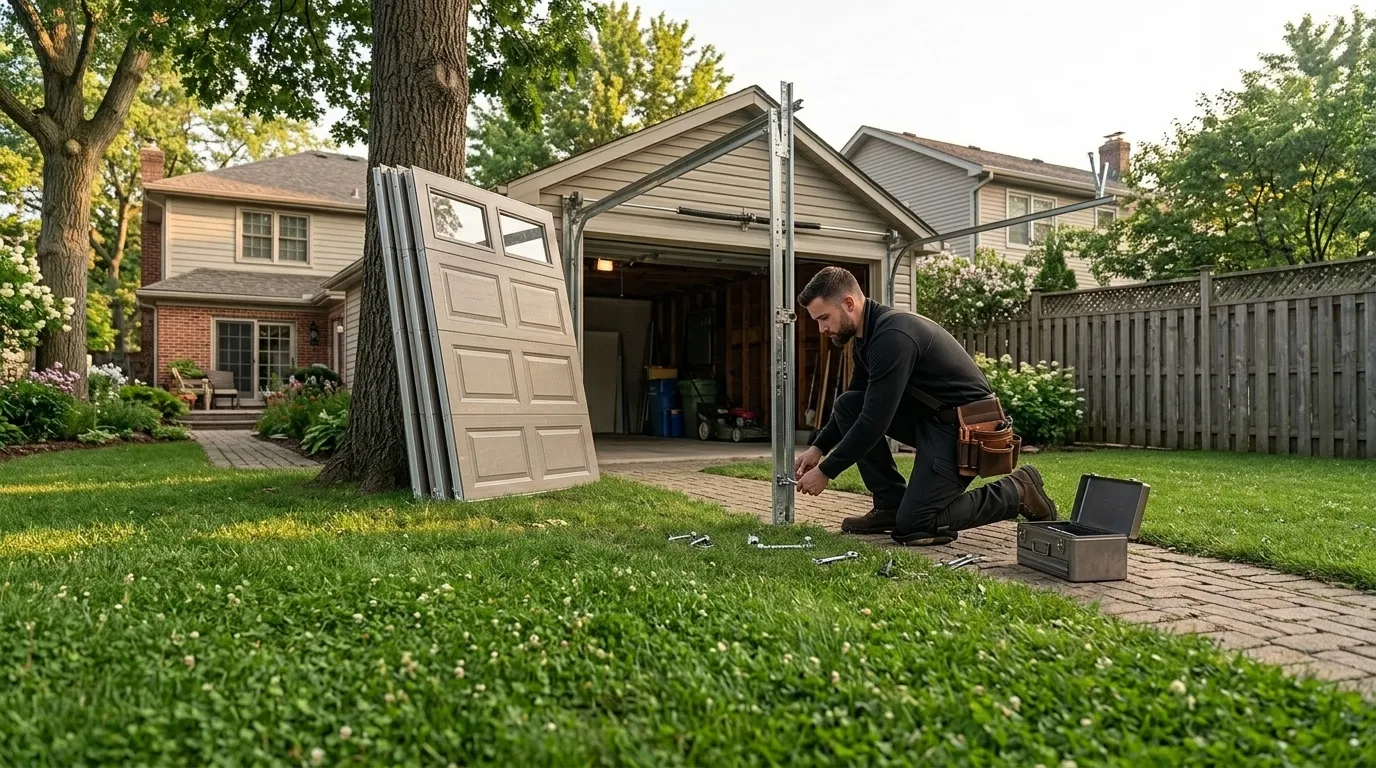
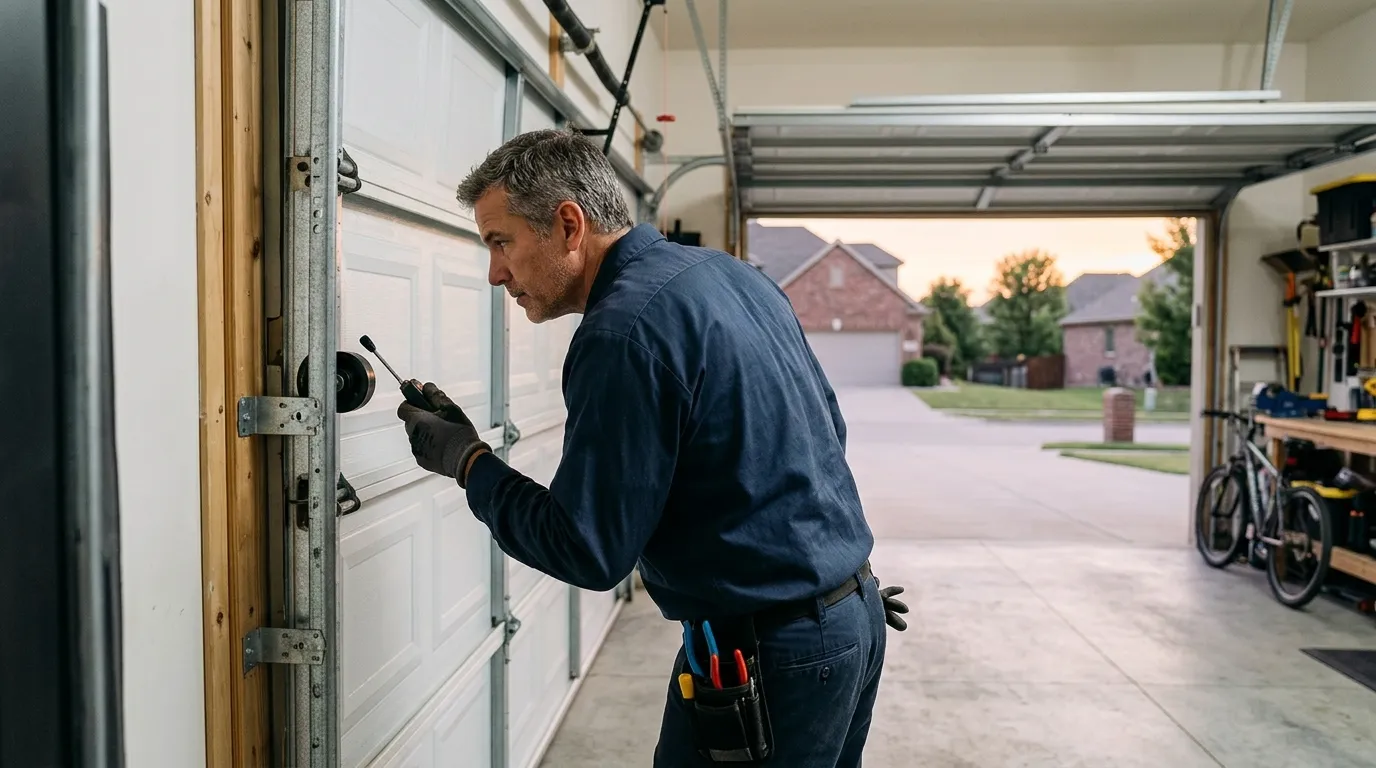
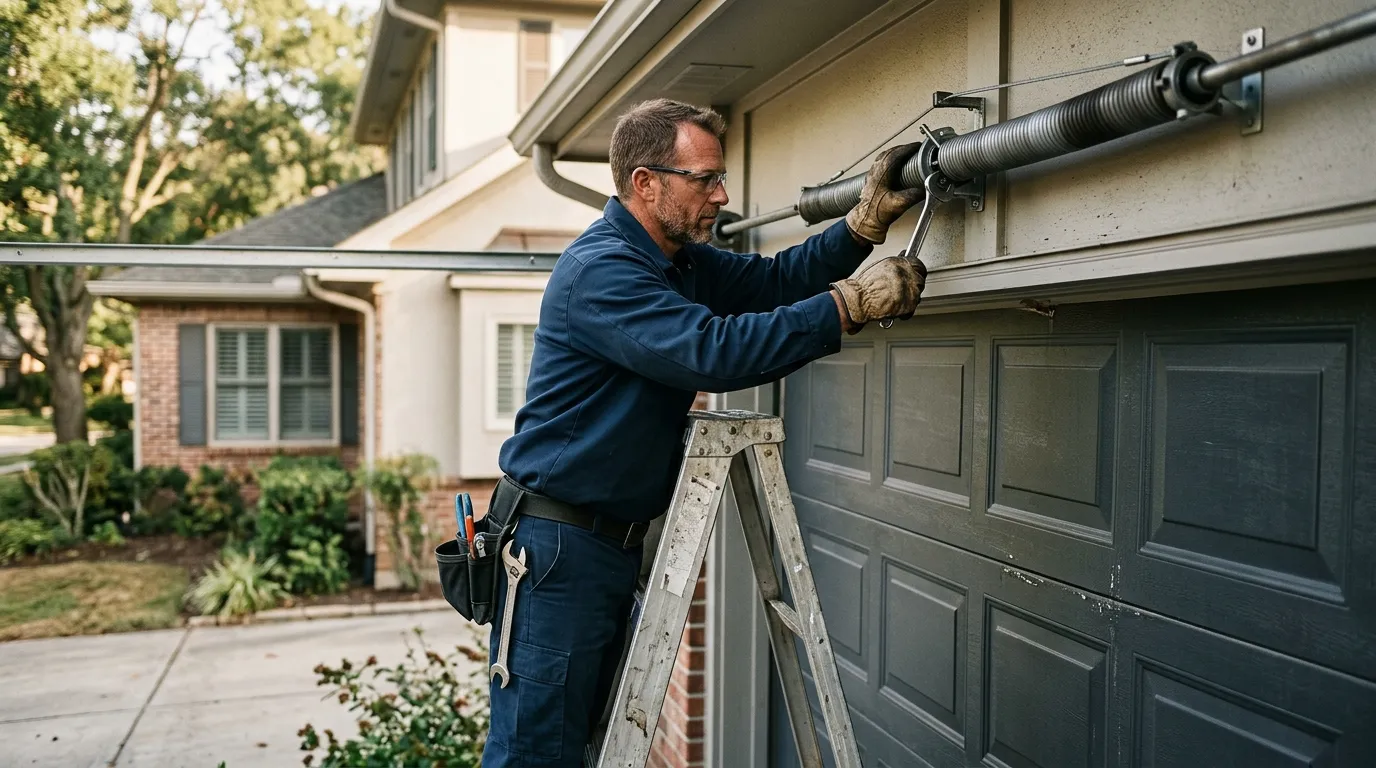
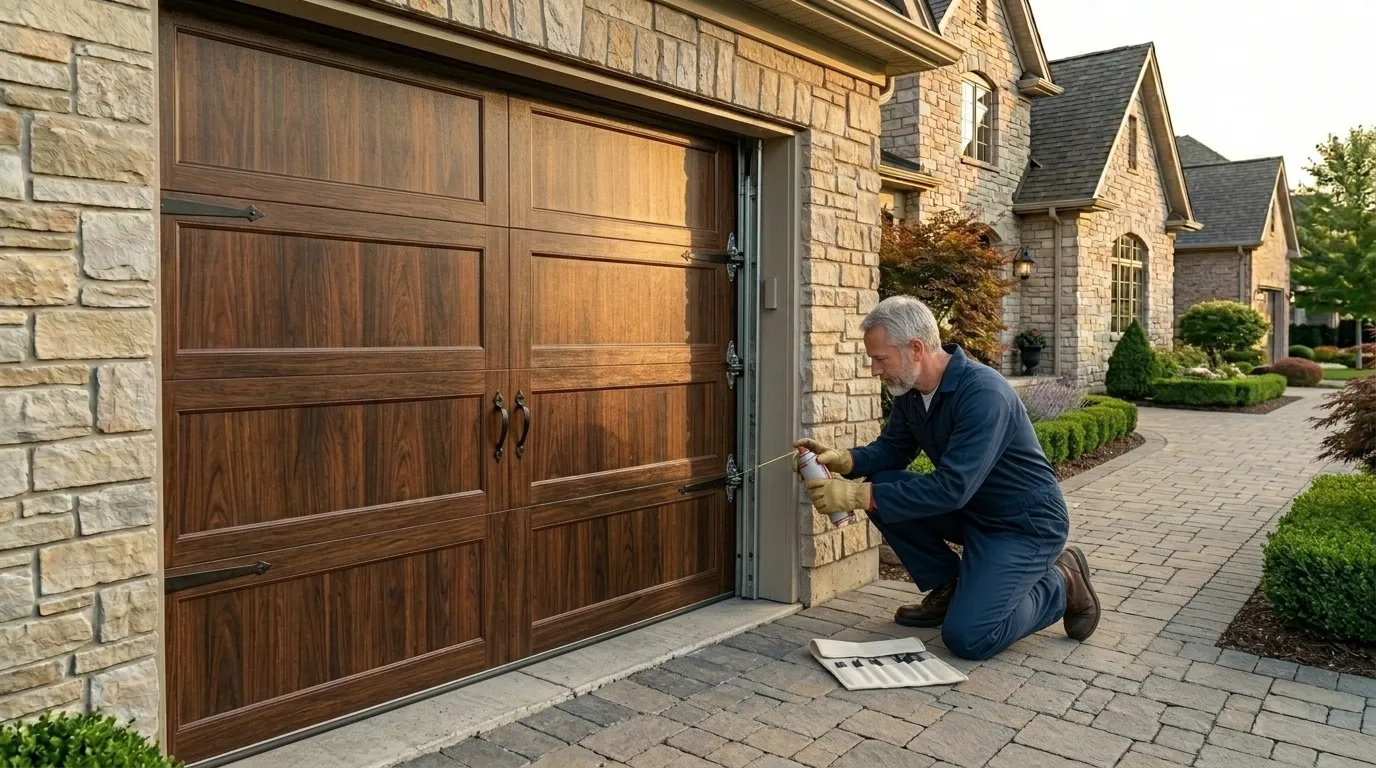
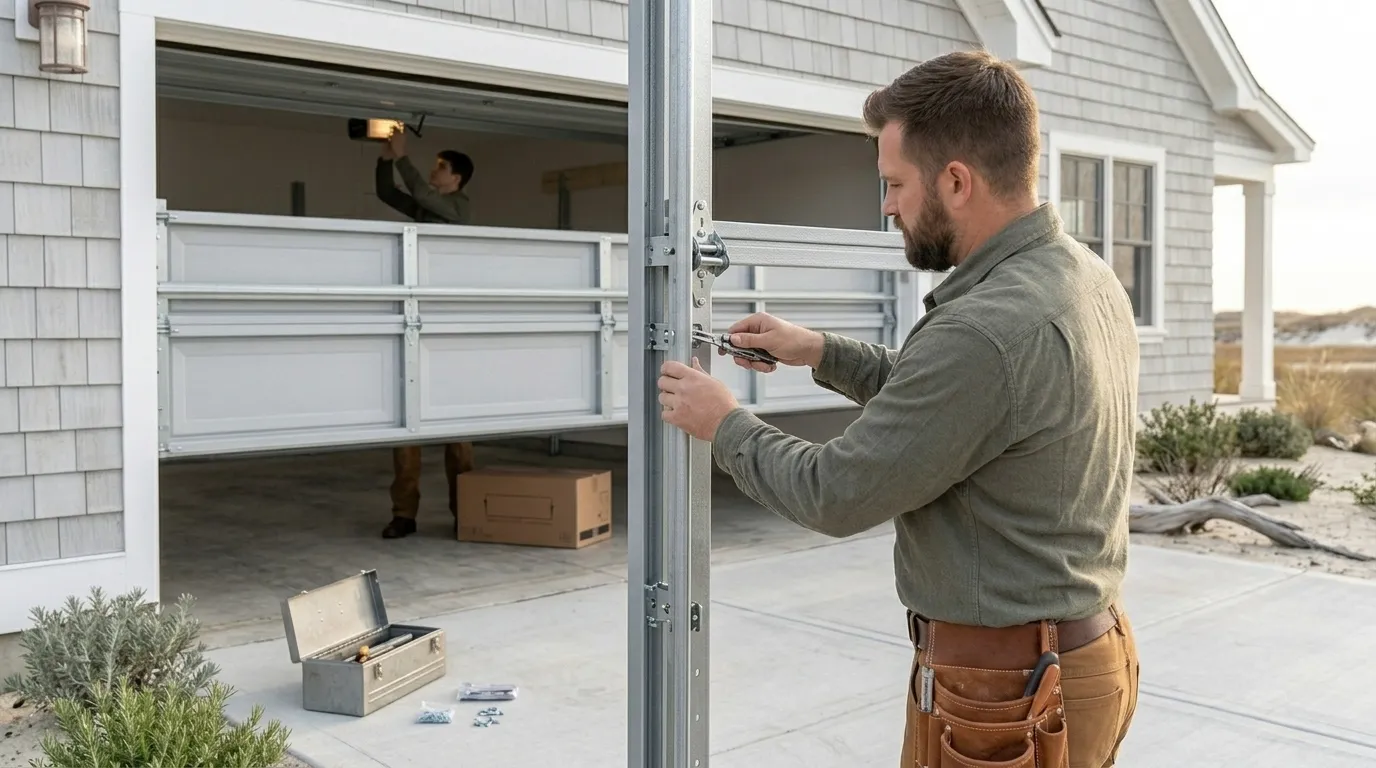
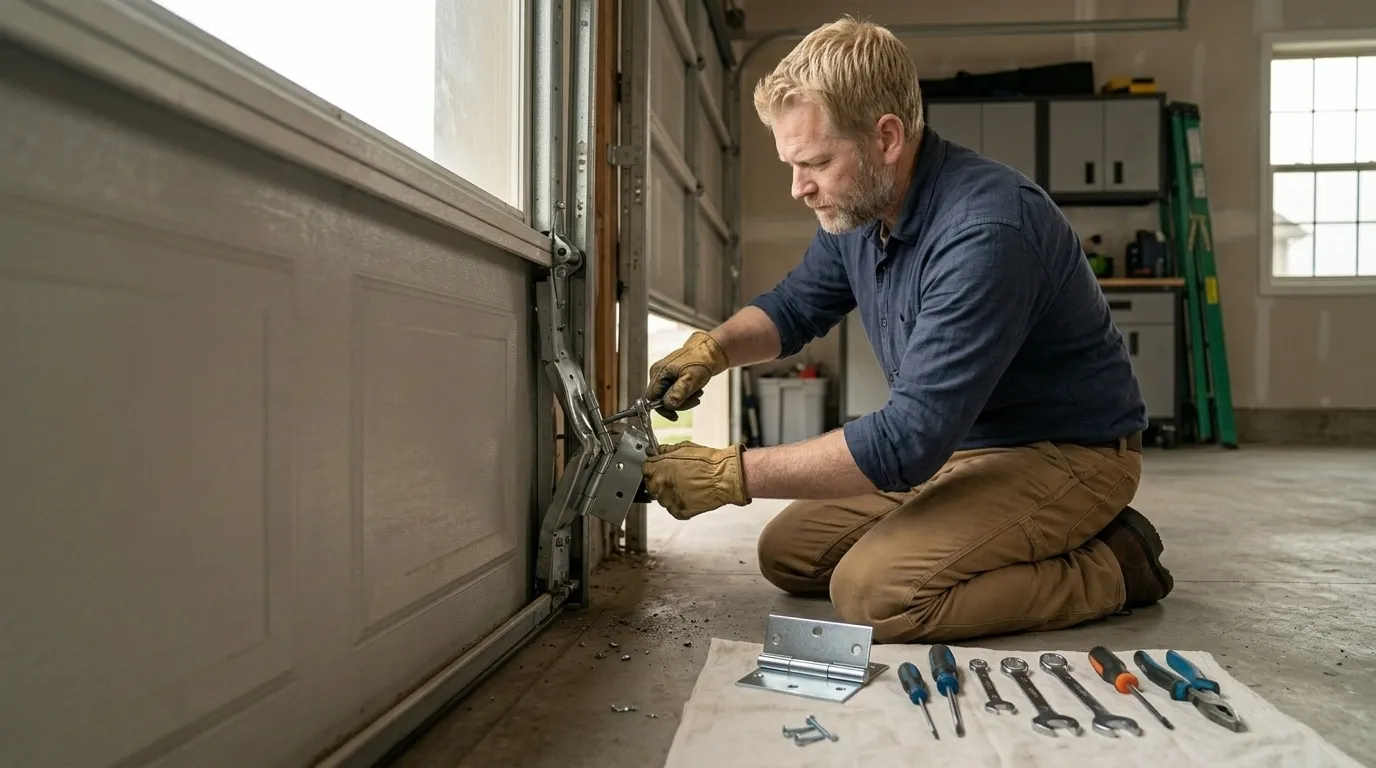
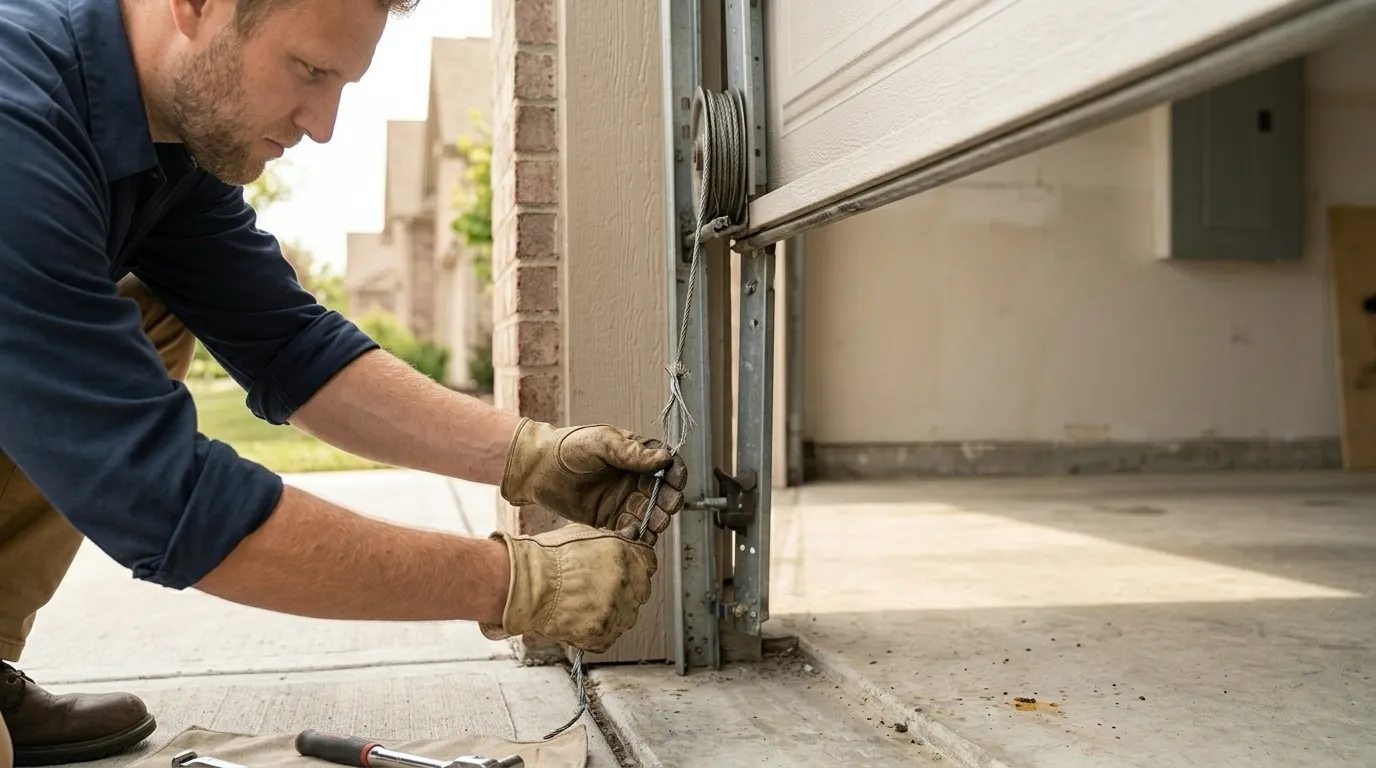
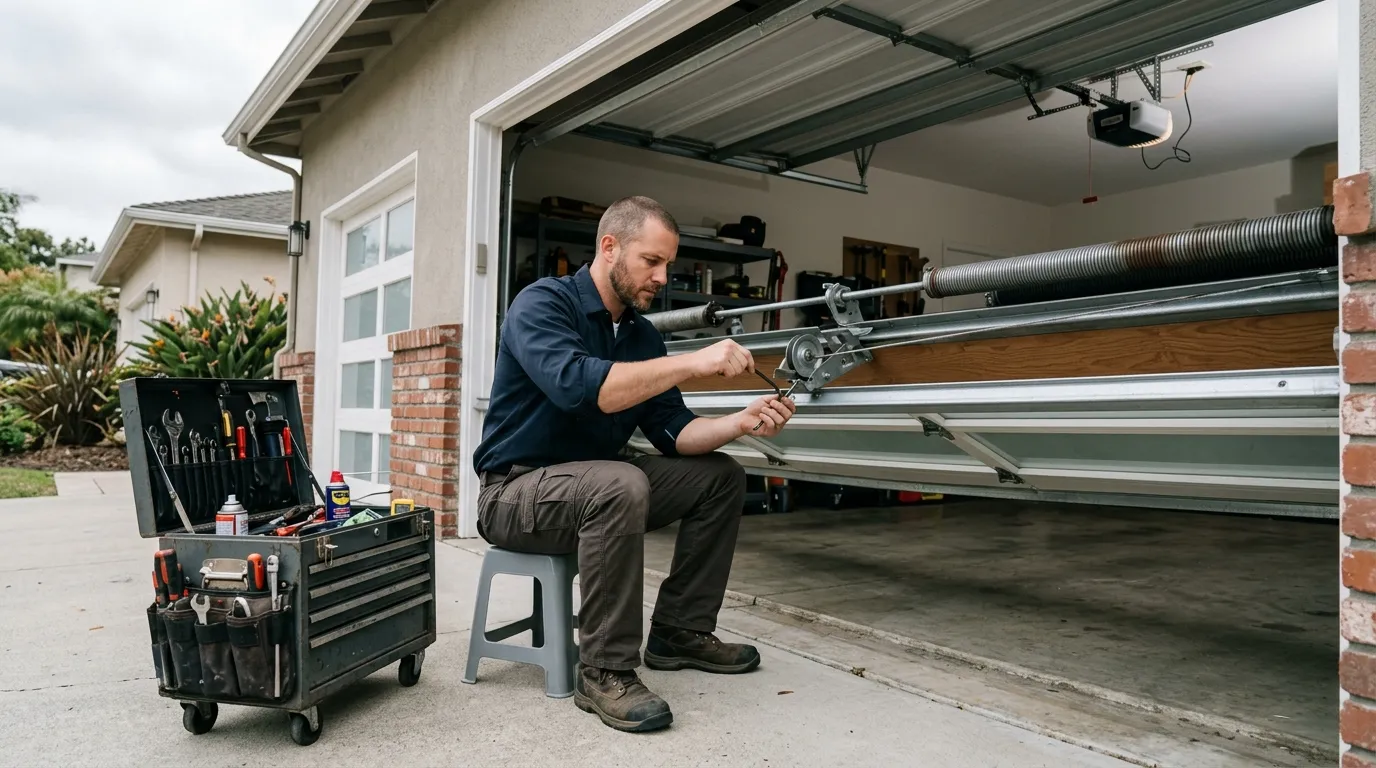
West Hollywood's median home here dates to 1965, just two years past the wider service area's 1963 median, but that gap matters less than what it tells you: this is a post-and-beam era neighborhood, built when steel sectional doors were replacing the old wood tilt-ups. If your door is original, it's likely a steel sectional on extension springs, not torsion, mounted on tracks that were never designed for today's heavier insulated panels. Owners who've swapped in a heavier door without upgrading the spring assembly are the ones who call about a door that won't stay open or slams down on its own.
We don't guess at this. We ask when the door and opener were last replaced before we quote anything, because a door installed in 1966 and one installed in 1998 fail in completely different ways. The extension-spring setups from that first wave are also the ones most likely to be missing a safety cable, which is a cheap fix compared to what it prevents.
The Houses Here
With 22,479 households, West Hollywood is a dense mix of low-rise apartment courts and small single-family lots left over from before much of the flatlands went multi-family. Median household income here runs $94,844, higher than the wider service area's $83,538, and it shows in how many owners replace a door outright rather than nurse along a cracked panel for another winter.
The mild temperate climate means we're not fighting frost heave or ice-jammed tracks here - the failures we see are mechanical: worn rollers, fatigued springs, openers that have run for decades without a tune-up. That's a small mercy for older doors, but it also means owners often don't know a spring is near the end of its cycle count until it breaks, usually on a day it's raised and lowered more than usual. No weather event forces the issue, so the wear sneaks up on people.
Where We Stop
We run out of Santa Monica, and West Hollywood sits about 9 miles east along a route that also passes Beverly Hills (7 miles) and Culver City (6 miles). That's close enough that a same-day slot is realistic most days, but it's still a drive, not a depot down the street - if you need someone standing by within the hour, that's not what we offer.
Our coverage runs out past a certain point; we're not routing jobs into places well outside this stretch, and we won't quote a job in a neighborhood we haven't actually mapped a route to. If you're on the side of West Hollywood nearer Beverly Hills rather than the Santa Monica side, mention it when you call - it changes the drive time and which slot we can offer you that day.
The Split Between Old and New
Across the wider service area, homes went up anywhere between 1947 and 2012, and West Hollywood's stock leans toward the earlier half of that window, with a fair amount of infill built or remodeled since. That split matters at the door. A 1960s original opener runs on a chain drive with manual reversal, no photo-eye sensors, and parts that stopped being manufactured years ago. A house remodeled or rebuilt more recently likely has a belt-drive opener with safety sensors and a steel door rated for a higher wind load than anything from the original build wave.
When we get a call on an older unit, we're straight about it. Sometimes the motor's fine and it just needs a new logic board or a set of rollers. Other times the unit predates the safety standards by enough that replacement is the responsible call, not a repair - we'll say so rather than patch something that shouldn't stay in service.
How it works
From “it’s stuck” to “it’s fixed”
01
Tell us what’s wrong
Describe the symptom - won’t open, loud bang, opener runs but the door won’t move.
02
On-site diagnosis
A technician tests the door under power and by hand and finds what actually failed.
03
Clear, up-front plan
You get the fix that’s needed and what drives the cost - before any work starts.
04
Repaired & tested
The repair is done, the door is set true and tested, and the work area left clean.
Serving Santa Monica, CA - tell us what your door’s doing and we’ll take it from there.
Straight answers about garage door repair in Santa Monica. Still unsure? Ask us directly.
How far is West Hollywood from your shop in Santa Monica?
About 9 miles. We travel that route regularly, but we don't keep a depot in West Hollywood itself, so we schedule around drive time rather than promising an on-the-spot arrival. Same-day appointments are usually workable, just not instant ones.
My house was built in the 1960s - does that change what kind of repair I need?
Often, yes. Homes from that era typically have extension springs and chain-drive openers rather than torsion springs and belt drives. Parts for the originals are harder to source, and safety features like photo-eye sensors usually weren't installed at all, so a repair sometimes turns into a recommendation to replace.
Do you cover areas past West Hollywood?
Our coverage has an edge, and we don't route jobs well outside the area we actually service from Santa Monica. If you're unsure whether your address is within range, call and we'll tell you straight rather than guess.
Is the mild climate here easier on garage doors?
It helps. We're not dealing with ice-jammed tracks or frost heave, so most failures we see are mechanical wear - rollers, springs, and openers reaching the end of their cycle life rather than weather damage. The wear still happens, it just happens quietly instead of all at once.